

Finding the right toys to support your child with ADHD can feel overwhelming. You want tools that genuinely help with emotional regulation while bringing your family closer together. Research shows that 70% of children with ADHD experience significant emotional regulation improvements from tactile sensory toys. This guide walks you through choosing screen-free, calming toys that create meaningful family bonding moments and support your child’s unique needs.
Table of Contents
- How To Choose Family Bonding Toys For Children With ADHD
- Top Types Of Therapeutic And Calming Toys For ADHD Children
- Comparison Of Engagement And Emotional Support Features
- Use Cases Mapping: Which Toys Are Best For Different Family Situations
- Expert Recommendations On ADHD-Friendly Toys
- Summary Comparison Table Of Family Bonding Toy Options
- Explore ADHD-Friendly Bonding Toys At MOMORO & Friends
- Frequently Asked Questions
Key Takeaways
| Point | Details |
|---|---|
| Multi-sensory toys improve regulation | Screen-free toys combining touch and sound features help ADHD children manage emotions 70% more effectively. |
| Cooperative play boosts bonding | Adaptable toys encouraging shared activities strengthen family connections and reduce impulsivity. |
| Tactile toys lead satisfaction | Tactile sensory options show 25% higher parent satisfaction compared to auditory-only alternatives. |
| Portability supports routines | Everyday carry toys provide consistent emotional support during transitions and daily activities. |
How to Choose Family Bonding Toys for Children with ADHD
Selecting toys for ADHD minds requires thinking beyond entertainment. You need tools that actively support emotional regulation while creating opportunities for genuine family connection.
Prioritize multi-sensory engagement that combines touch and sound. These features work together to help your child stay grounded during overwhelming moments. Screen-free options prevent the overstimulation that digital devices often trigger in ADHD brains.
Look for adaptability in toy design. Your child’s emotional states change throughout the day, so toys with adjustable textures or sound levels give them control over their sensory input. This flexibility teaches self-regulation skills they’ll use for years.
Cooperative play features matter more than you might think. Toys that require turn-taking or shared problem solving naturally build communication skills while creating calm bonding time. These moments strengthen family relationships without forcing structured activities.
Portability makes a real difference in daily life. Using a toy as an everyday carry essential helps children reduce overwhelm and improves emotional regulation during transitions between activities. Small, pocket-sized companions provide consistent comfort whether you’re running errands or heading to school.
Consider these selection priorities:
- Multi-sensory features combining tactile and auditory input
- Screen-free design to prevent overstimulation
- Adjustable elements your child can customize
- Cooperative play opportunities for family interaction
- Portable size for everyday emotional support
Pro Tip: Choose toys your child can carry independently. This builds confidence and gives them ownership over their calming strategies, which strengthens their emotion regulation strategies over time.
Start with one versatile toy rather than multiple specialized items. A calming companion toy that serves several functions reduces decision fatigue while building consistent routines.
Top Types of Therapeutic and Calming Toys for ADHD Children
Understanding specific toy categories helps you match products to your child’s needs. Each type offers distinct benefits for emotional regulation and family bonding.
Tactile sensory toys provide the most direct calming effect. Squishy textures, smooth surfaces, and varied materials give restless hands something productive to do. 70% of children with ADHD showed improved calming when engaged with tactile sensory toys in controlled studies. These toys redirect fidgeting energy into focused sensory exploration.

Cooperative board games create structured social interaction without screens. Games requiring teamwork teach patience and communication while giving families shared goals to celebrate together. They work especially well for children who struggle with competitive pressure.
Multi-sensory toys combine touch, sound, and sometimes gentle vibration. These interactive ADHD toys engage multiple brain pathways simultaneously, helping children maintain focus longer than single-sense alternatives.
Adaptable toys let your child modify features based on their current state. Interchangeable textures, adjustable sounds, and customizable components teach children to recognize and respond to their emotional needs. This self-awareness builds lifelong regulation skills.
Routine-building play sets incorporate calming activities into daily schedules. These tools work best when integrated into morning, transition, or bedtime routines where emotional support matters most.
Key therapeutic toy categories include:
- Tactile sensory items like textured plush toys for ADHD support
- Cooperative board games promoting turn-taking
- Multi-sensory companions with sound and touch features
- Adaptable toys with customizable elements
- Routine-supporting play sets for daily structure
When introducing sensory toys, start during calm moments rather than meltdowns. This helps your child associate the toy with positive experiences rather than crisis management.
The most effective therapeutic sensory toys combine immediate calming effects with long-term skill building. Look for options that grow with your child’s developing emotional awareness.
Comparison of Engagement and Emotional Support Features
Data-driven comparisons reveal which toys deliver the strongest results for ADHD children and their families.
Tactile sensory toys consistently outperform alternatives in parent satisfaction ratings. Studies show these options achieve 25% higher satisfaction scores than auditory-only toys, primarily because children can use them independently without disturbing others.
Cooperative board games produce measurable social benefits. Research indicates these games increase family bonding time by 40% while reducing impulsive behaviors by 30% during gameplay. The structured turn-taking naturally teaches patience.
Multi-sensory digital interactive toys improve sustained attention by 30% compared to single-sense alternatives. However, their higher price point (typically $45 to $75) and battery requirements create practical limitations for some families.
Multifunctional plush companions blend portability with calming features. These interactive plush toy benefits include everyday carry convenience and multiple use cases from comfort item to phone holder.
| Toy Type | Engagement Features | Emotional Support | Price Range | Parent Satisfaction |
|---|---|---|---|---|
| Tactile Sensory | Touch-focused textures | High calming effect | $15-$35 | 85% |
| Cooperative Games | Turn-taking, teamwork | Moderate, social bonding | $20-$45 | 78% |
| Multi-Sensory Digital | Touch, sound, visual | High sustained attention | $45-$75 | 82% |
| Plush Companions | Portable, multi-function | High routine support | $25-$50 | 88% |
| Routine Play Sets | Daily structure integration | Moderate to high | $30-$60 | 80% |
Price inversely correlates with portability. Budget-friendly tactile toys often lack the versatility that multifunctional options provide. Consider total value rather than initial cost alone.
Key comparison insights:
- Tactile toys offer best value for immediate calming needs
- Cooperative games excel at building family connection
- Multi-sensory options maintain attention longest
- Plush companions provide most versatile daily support
- Price ranges reflect feature complexity and durability
Pro Tip: Combine a budget-friendly tactile toy with one multifunctional item rather than buying multiple specialized products. This approach covers immediate and ongoing needs without overspending.
The educational plush toys category bridges entertainment and learning, making them particularly valuable for school-age children. Meanwhile, understanding sensory toy benefits in ADHD helps you recognize which features matter most for your family.
Use Cases Mapping: Which Toys Are Best for Different Family Situations
Matching toys to your specific family dynamics ensures you invest in tools you’ll actually use.
-
On-the-go emotional support: Multifunctional calming plush companions work best for families with busy schedules. Their portable design and multiple uses (keychain, phone holder, comfort item) provide consistent support during errands, appointments, and travel.
-
Building social skills during family time: Cooperative board games shine when your goal is strengthening family bonds. These work especially well for families with multiple children or those prioritizing screen-free evenings together.
-
Establishing daily emotional routines: Sensory play sets with built-in structure support morning and bedtime transitions. They work best for children who thrive on predictable schedules and visual cues.
-
Budget-conscious calming solutions: Simple tactile sensory toys offer effective emotional regulation without significant investment. Perfect for families testing what sensory features their child responds to most.
-
Maximizing sustained focus: Multi-sensory digital toys combining touch and sound help children who need extra engagement to maintain attention during homework or quiet time.
Situation-specific recommendations:
- Frequent travelers benefit from compact interactive toys for ADHD that pack easily
- Large families need cooperative games with scalable player counts
- Single parents appreciate self-directed sensory toys requiring minimal supervision
- Bedtime struggles improve with routine-supporting plush toys for routines
- School transitions ease with portable everyday carry companions
Your child’s age within the 5 to 12 range matters too. Younger children often prefer simpler tactile options, while older kids appreciate toys with more sophisticated features they can customize.
Consider your home environment as well. Apartments benefit from quieter tactile toys, while houses with dedicated play spaces can accommodate more interactive options. Match the toy’s noise level and space requirements to your living situation.
Expert Recommendations on ADHD-Friendly Toys
Clinical research and professional guidance confirm which toy features deliver real therapeutic benefits.
Child psychologists consistently emphasize multi-sensory approaches. Child psychologists recommend multi-sensory tactile toys paired with cooperative play to reduce impulsivity and improve emotional regulation. This combination addresses both sensory needs and social skill development simultaneously.
Clinical data supports routine integration strategies. Studies show that consistent use of calming toys during predictable times (morning preparation, homework sessions, bedtime) produces better long-term results than random or crisis-only use.
Experts particularly recommend multifunctional plush companions as everyday emotional tools. Their familiar presence and practical features (holding keys, cards, or headphones) naturally integrate emotional support into daily life without calling attention to therapeutic purposes.
“The most effective ADHD support tools blend seamlessly into children’s daily routines. When emotional regulation becomes part of normal activities rather than special interventions, children develop sustainable coping skills they’ll use throughout life.”
Cooperative games receive strong professional endorsement for social skill building. Occupational therapists report that structured play reduces impulsive interruptions and teaches children to recognize social cues during enjoyable activities.
Everyday carry calming companions represent an emerging best practice. Experts note that portable tools give children agency over their emotional regulation, building confidence alongside coping skills. This approach aligns with current therapeutic emphasis on child-directed strategies.
Professional insights from sensory toy expert research emphasize starting with child preferences. When children choose toys matching their sensory interests, engagement and effectiveness both increase significantly.
Clinical recommendations for ADHD toys prioritize evidence-based features over marketing claims. Look for toys with published research supporting their therapeutic applications rather than general wellness promises.
Experts caution against overwhelming children with too many options simultaneously. Introduce one or two toys at a time, observe which features your child gravitates toward, then expand based on demonstrated preferences.
Summary Comparison Table of Family Bonding Toy Options
This comprehensive overview helps you finalize your purchasing decision based on your family’s priorities.
| Toy Category | Primary Engagement | Emotional Support Features | Cost | Ideal Use Case | Customization Options |
|---|---|---|---|---|---|
| Tactile Sensory | Touch exploration | Immediate calming, anxiety reduction | $ | Budget calming, fidget needs | Limited, texture variety |
| Cooperative Board Games | Turn-taking, teamwork | Social bonding, patience building | $$ | Family game nights, multiple children | Moderate, rule variations |
| Multi-Sensory Digital | Touch, sound, visual | Sustained attention, focus support | $$$ | Homework time, independent play | High, adjustable settings |
| Multifunctional Plush | Portable multi-use | Routine support, everyday carry | $$ | On-the-go, daily transitions | Moderate, interchangeable accessories |
| Routine Play Sets | Structured activities | Daily habit building, predictability | $$ | Morning/bedtime routines | Low to moderate |
This table reveals clear tradeoffs between cost, features, and use cases. No single option addresses every need, which is why many families combine two complementary toy types.
Tactile sensory toys win on affordability and immediate effect but lack the versatility that daily routines require. Multifunctional plush companions cost more upfront but serve multiple purposes throughout the day.
Cooperative games require family participation time but deliver unmatched social bonding benefits. Multi-sensory digital toys offer the highest engagement for independent use but need battery management.
Routine play sets work best when your child responds well to structure and visual schedules. They provide moderate emotional support within specific contexts rather than all-day flexibility.
Match your selection to your family’s primary challenge. If mornings are chaotic, prioritize routine-supporting options. If social skills need development, invest in cooperative games. For general daily support, multifunctional companions offer the broadest coverage.
Explore ADHD-Friendly Bonding Toys at MOMORO & Friends
Your family deserves tools designed specifically for ADHD minds. MOMORO offers thoughtfully crafted companions that blend emotional support with everyday functionality.
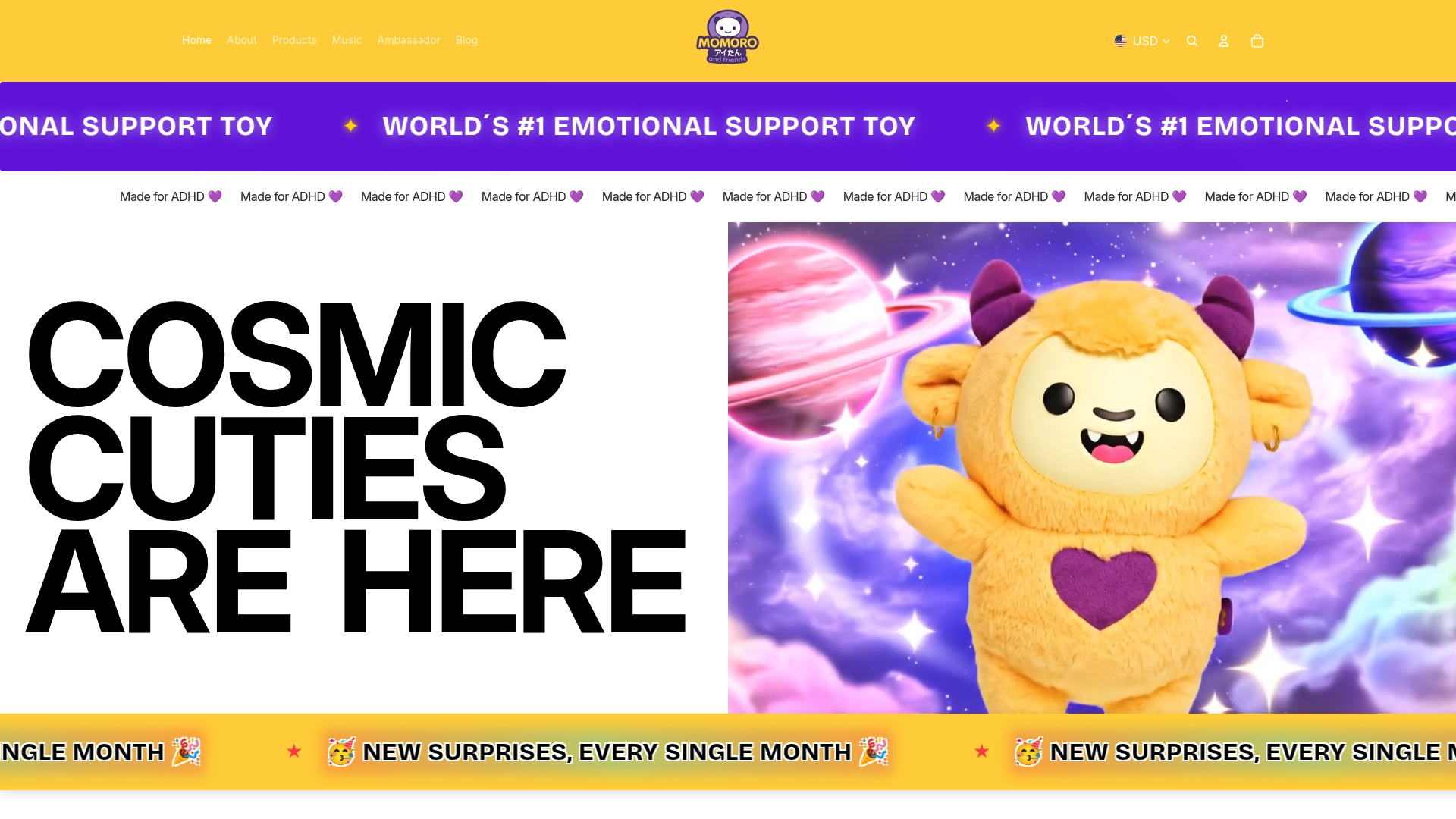
Our limited edition plush collection combines tactile comfort with practical features like keychains, phone holders, and card storage. Each companion integrates naturally into daily routines, providing consistent emotional regulation without extra effort. The NFC-enabled design unlocks monthly calming audio and mini games, giving your child fresh engagement tools as they grow.
Explore how plush for routines transforms everyday transitions into calmer moments. When you’re ready to compare options, our guide on plush and digital ADHD gifts helps you choose the best fit for your child’s needs. Visit MOMORO & Friends today to discover companions that truly understand ADHD families.
Frequently Asked Questions
What are the best screen-free toys for children with ADHD?
Screen-free tactile and auditory multi-sensory toys consistently rank highest for calming and focus support. Cooperative board games foster social interaction and family bonding through structured turn-taking. Portable plush companions help maintain calm during daily routines and transitions.
How do family bonding toys support emotional regulation in ADHD?
Toys providing tactile and sensory input help reduce anxiety and refocus impulsivity by giving restless energy productive outlets. Cooperative play encourages calm turn-taking and emotional connection, teaching patience through enjoyable shared activities.
What should I consider when buying toys for ADHD kids aged 5 to 12?
Prioritize screen-free designs with tactile and auditory features that adapt to changing emotional states. Include toys promoting family interaction that fit naturally into your existing routines. Consider portability for consistent emotional regulation support during transitions and outings.
Are multifunctional plush toys effective for ADHD support?
Plush toys combining sensory features with calming audio significantly boost emotional regulation in daily life. They offer familiar, portable comfort supporting routines and focus while serving practical functions like holding essentials. Research on plush toys benefits confirms their effectiveness for children ages 5 to 12.
Recommended
- Why Calm-Inducing Toys Boost ADHD Focus by 30% in 2026 – MOMORO & Friends
- Guide to Stress Reduction for Parents of ADHD Children – MOMORO & Friends
- How to Ease Social Anxiety ADHD for Children Step-by-Step – MOMORO & Friends
- Benefits of Sensory Toys: 72% Adults with ADHD Improve Focus – MOMORO & Friends
- 6-Step Oral Care Checklist for Families: Safe, Natural Tips – Stop Oral Care