

Every parent faces moments when their child with ADHD or anxiety feels overwhelmed and finds it hard to settle. Supporting emotional regulation in these situations matters because it can transform daily struggles into opportunities for growth and calm. Drawing on expert-backed strategies, you will find practical ways to create a supportive sanctuary at home using sensory tools and interactive plushes to nurture confidence and resilience in your child.
Table of Contents
- Step 1: Set Up A Calming Environment With Comforting Tools
- Step 2: Introduce Emotion Identification Skills Using Plushes
- Step 3: Guide Your Child In Recognising Triggers And Reactions
- Step 4: Teach Practical Coping Strategies Step By Step
- Step 5: Verify Progress And Celebrate Emotional Milestones
Quick Summary
| Key Point | Explanation |
|---|---|
| 1. Design a calming environment | Create sensory zones with soft textures and adjustable lighting to help children feel safe and less overwhelmed. |
| 2. Use plush toys for emotions | Introduce emotion recognition through plush toys, making emotional exploration safe and engaging for your child. |
| 3. Track emotional triggers | Use a trigger tracking journal to help your child identify patterns in their emotional experiences and reactions. |
| 4. Teach coping strategies step-by-step | Gradually implement emotional self-management techniques, making them interactive and supportive for your child. |
| 5. Celebrate emotional milestones | Acknowledge small improvements in emotional regulation with genuine praise and reward systems to build confidence. |
Step 1: Set up a calming environment with comforting tools
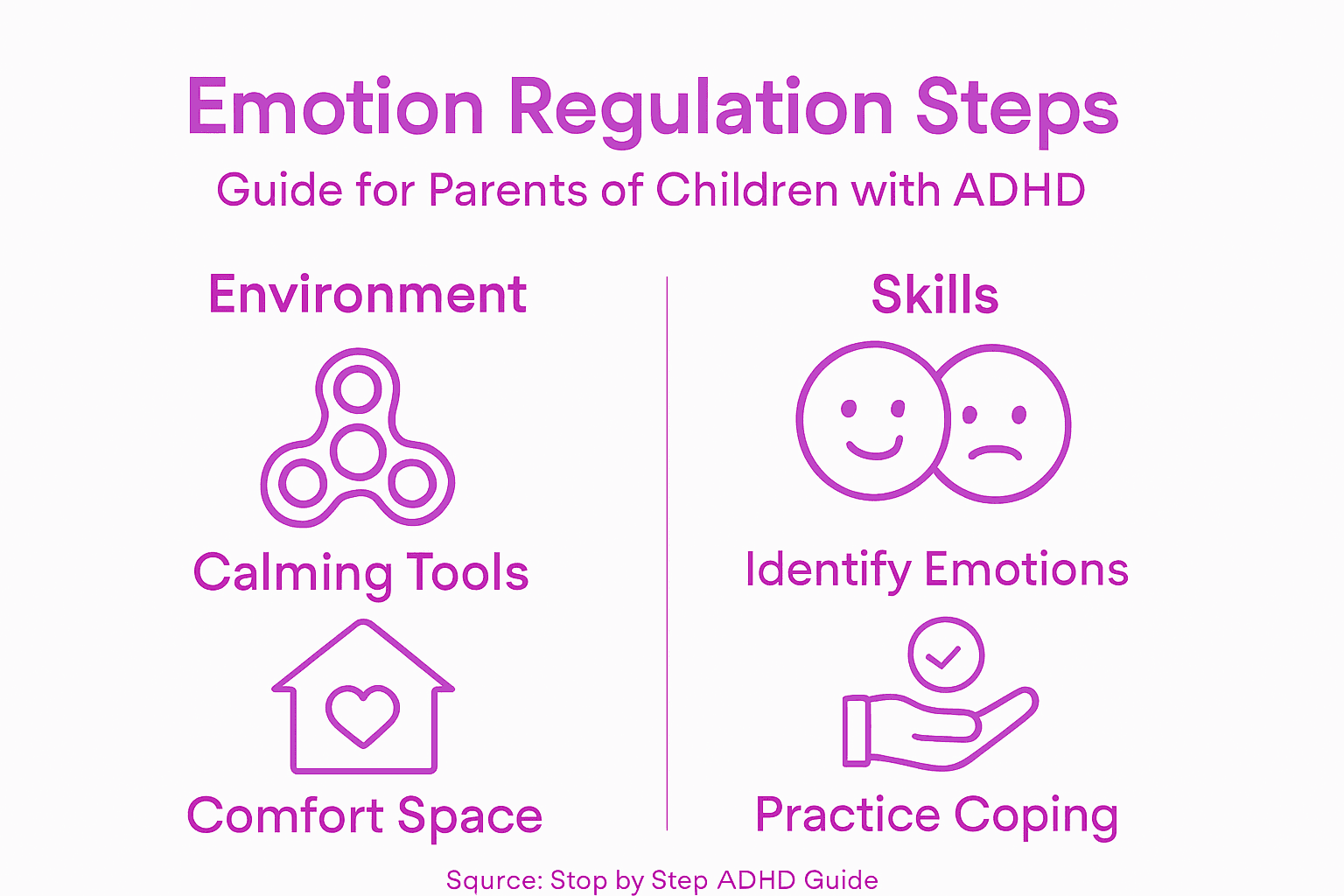
Creating a nurturing, sensory-considerate space can dramatically improve emotional regulation for children with ADHD. This step focuses on transforming your home into a supportive sanctuary that helps your child feel safe and grounded.
Designing a calming environment involves strategic sensory management. The NHS recommends creating specific sensory zones that provide multiple comfort options. Consider establishing these key elements:
- A designated quiet corner with soft cushions
- Dim, adjustable lighting for reduced visual stimulation
- Noise-cancelling headphones
- Soft blankets with different textures
- Weighted lap pads or compression vests
Choose materials and tools that provide gentle, consistent sensory input. Soft fabrics, muted colours, and predictable textures can help children feel more regulated. Avoid bright lights, loud patterns, or overwhelming visual stimuli that might trigger sensory overload.
Here’s a comparison of environmental adjustments and their emotional impact for children with ADHD:
| Environmental Adjustment | Potential Benefit | Example Tool |
|---|---|---|
| Sensory zoning | Reduces overwhelm, increases calm | Noise-cancelling headphones |
| Soft, predictable textures | Promotes regulation, eases anxiety | Weighted lap pads |
| Dim, adjustable lighting | Lowers stimulation, aids focus | Adjustable lamps |
| Child involvement in design | Boosts control and comfort | Choice of cushions or blankets |
A carefully curated environment can serve as an emotional anchor for children struggling with sensory processing and emotional regulation.
Top tip: Involve your child in designing their calming space to increase their sense of control and comfort.
Step 2: Introduce emotion identification skills using plushes
Helping children with ADHD understand and articulate their emotions is a crucial skill that can transform their emotional regulation journey. In this step, we will explore how plush toys can become powerful tools for emotional learning and expression.
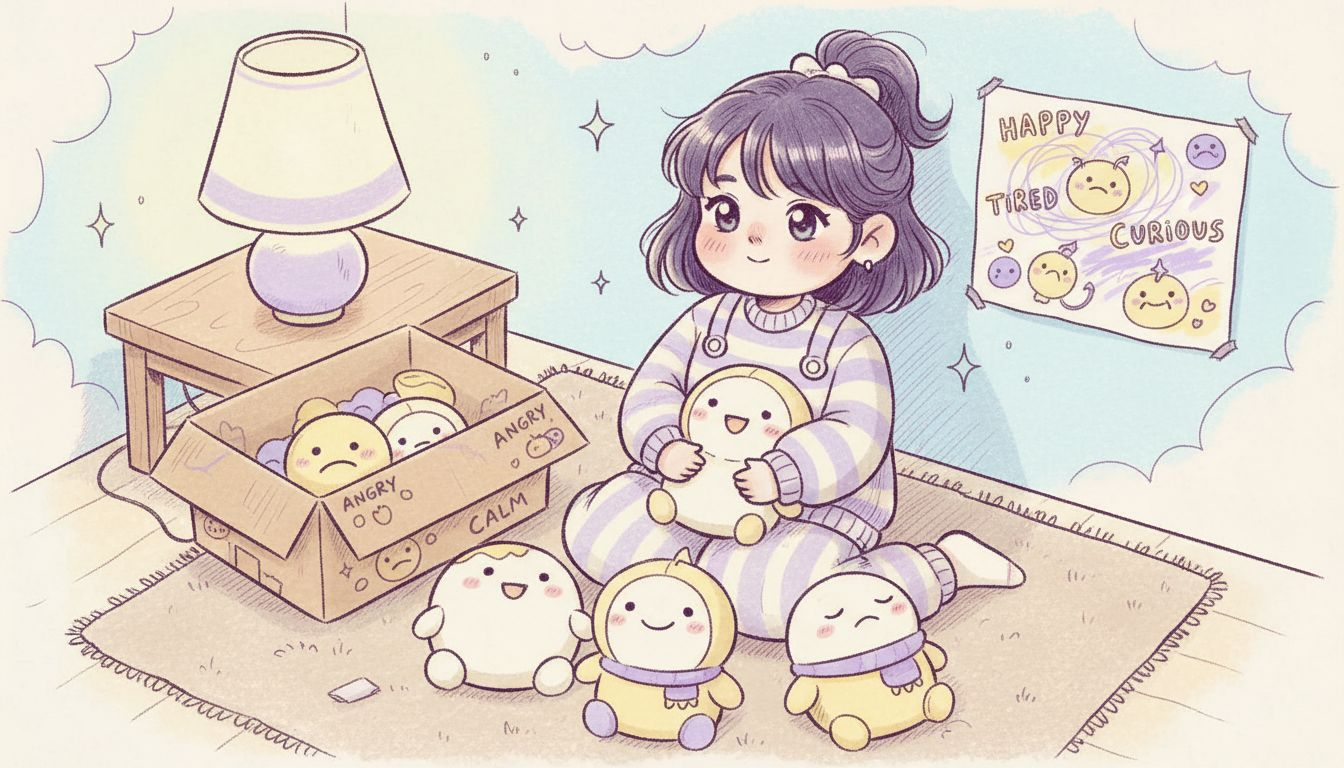
The Sheffield Children’s NHS Trust suggests using visual support tools to help children map out their feelings. Start by selecting a few plush companions that can represent different emotional states. Create a simple emotion recognition game where each plush represents a specific feeling:
- Happy plush: Bright colours, big smile
- Sad plush: Soft, drooping posture
- Angry plush: Slightly tense body language
- Worried plush: Smaller, more hunched position
Encourage your child to interact with these plushes by asking questions like “How do you think this plush is feeling right now?” This approach transforms abstract emotions into tangible, approachable experiences. The goal is to make emotional exploration feel safe and playful.
Plush toys can act as non-threatening intermediaries, helping children explore complex emotional landscapes without feeling overwhelmed.
Top tip: Create a comfortable, judgement-free zone where your child can freely express emotions through their plush companions.
Step 3: Guide your child in recognising triggers and reactions
Understanding emotional triggers is a critical skill for children with ADHD, helping them develop self-awareness and emotional regulation. This step focuses on teaching your child to identify and manage their unique emotional responses.
The NHS recommends identifying behavioural patterns that signal potential emotional overwhelm. Begin by creating a trigger tracking journal where you and your child can collaboratively document emotional experiences:
- Physical signs (increased heart rate, sweating)
- Environmental factors (loud noises, crowded spaces)
- Emotional precursors (frustration, anxiety)
- Specific situations that cause stress
Encourage open dialogue about these experiences without judgment. Ask gentle questions like “What did you notice happening in your body before you felt upset?” This approach helps transform trigger recognition from a challenging task into an exploratory conversation.
Emotional awareness is not about eliminating triggers, but understanding and managing them with compassion and strategy.
Top tip: Create a calm, safe space where your child feels comfortable sharing their emotional experiences without fear of criticism.
Step 4: Teach practical coping strategies step by step
Developing effective coping strategies is crucial for children with ADHD, helping them navigate emotional challenges with confidence and resilience. In this section, we will explore structured approaches to teach emotional self-management skills.
The East Suffolk and North Essex NHS Trust provides step-by-step strategies for supporting children with emotional regulation. Break down complex emotional management into manageable techniques:
- Deep breathing exercises
- Simple meditation techniques
- Physical movement or stretching
- Sensory grounding methods
- Positive self-talk strategies
Implement these strategies gradually, allowing your child to practice in low-stress environments first. Create a visual strategy chart that outlines each technique, making the learning process interactive and engaging. Demonstrate each method yourself, showing that emotional regulation is a skill everyone can develop.
Below is a summary of practical coping strategies with suggested practice environments:
| Coping Strategy | When to Introduce | Ideal Practice Setting |
|---|---|---|
| Deep breathing | During mild stress | Calm living room or bedroom |
| Meditation | Before bedtime | Quiet, distraction-free zone |
| Physical movement | Pre-empting agitation | Open play area |
| Sensory grounding | After emotional upset | Dedicated sensory corner |
| Positive self-talk | Daily routines | Joint parent-child activities |
Coping strategies are not about perfection, but about progress and building emotional resilience.
Top tip: Practice these techniques together, transforming learning into a supportive, shared experience.
Step 5: Verify progress and celebrate emotional milestones
Tracking and acknowledging your child’s emotional growth is fundamental in supporting their ADHD journey. This step focuses on recognising and reinforcing the small yet significant improvements in emotional regulation.
Research highlights that celebrating emotional milestones boosts motivation and builds confidence. Consider creating a progress tracking system with tangible rewards:
- Weekly emotion journals
- Sticker charts for emotional regulation
- Visual milestone trackers
- Small reward systems
- Personal achievement certificates
Use specific, genuine praise that highlights their actual emotional management efforts. Instead of generic statements, say things like “I noticed how calmly you breathed through your frustration” to reinforce positive strategies.
Emotional growth is not measured by perfection, but by consistent effort and incremental improvements.
Top tip: Make celebration a shared, joyful experience that feels supportive rather than evaluative.
Support Your Child’s Emotional Journey with MOMORO & FRIENDS
Parents navigating the challenges of supporting children with ADHD understand how vital it is to create calming environments and build emotional awareness step by step. This guide highlights key pain points such as sensory overload, the need for safe emotional expression, and practical coping strategies your child can grasp easily. Developments like using plush toys for emotion identification resonate deeply with MOMORO & FRIENDS — interactive collectible plushes designed specifically to comfort and engage children struggling with emotional regulation and sensory sensitivities.

Discover how MOMORO blends comfort, creativity, and technology to provide calming sensory input and emotional support through monthly digital gifts unlocked by each NFC-enabled plush. This product supports the calming environment and emotional recognition steps described in the guide, making emotional learning feel playful and reassuring. Take the next step to transform your child’s emotional regulation journey today by exploring MOMORO & FRIENDS and seeing how gentle, interactive tools can make a real difference. Visit https://momoro.store now to bring this unique calming companion into your home.
Frequently Asked Questions
How can I set up a calming environment for my child with ADHD?
To create a calming environment, designate a quiet corner with soft cushions, adjustable lighting, and sensory tools like noise-cancelling headphones. Incorporate soft fabrics and muted colours to reduce visual stimulation and promote relaxation.
What are some effective techniques for teaching my child to identify their emotions?
Utilise plush toys to represent different emotional states during playtime. Engage your child in an emotion recognition game, asking them to describe how each plush might feel, transforming emotions into relatable experiences.
How can I help my child recognise their emotional triggers?
Encourage your child to maintain a trigger tracking journal that documents physical signs, emotional precursors, and the specific situations that lead to emotional overwhelm. Review this journal regularly together to foster open discussions about their feelings and reactions.
What coping strategies should I teach my child with ADHD?
Introduce coping strategies like deep breathing exercises and physical movement step by step, beginning in low-stress environments. Use a visual strategy chart to make the learning process enjoyable and interactive, helping your child develop emotional self-management skills.
How can I celebrate my child’s emotional milestones as they progress?
Create a progress tracking system, such as a sticker chart or visual milestone tracker, to recognise your child’s achievements. Use specific praise to highlight their emotional management efforts, ensuring celebrations feel supportive and encouraging in nature.
Recommended
- How to Develop Emotional Literacy for Children with ADHD – MOMORO & Friends
- Guide to Stress Reduction for Parents of ADHD Children – MOMORO & Friends
- How to Handle Emotional Dysregulation with Calm Strategies – MOMORO & Friends
- Weighted Plush Benefits Guide for ADHD and Anxiety Relief – MOMORO & Friends