

Overwhelm for young adults with ADHD isn’t just stress. It’s a flood of thoughts, sensory input, and emotions that disrupts focus and drains emotional energy daily. This guide shares ADHD-specific strategies, from calming routines to digital tools and physical organisation, to help you manage overwhelm and improve emotional regulation step by step.
Table of Contents
- Understanding ADHD Overwhelm And Emotional Dysregulation
- Prerequisites: What You Need Before Starting
- Establishing Daily ADHD-Calming Routines
- Leveraging ADHD-Specific Calming Digital Tools
- Organising Physical Essentials To Minimise Overwhelm
- Practical Task And Time Management To Control Overwhelm
- Common Mistakes To Avoid When Managing ADHD Overwhelm
- Expected Results And Timelines For Overwhelm Reduction
- Explore Supportive Tools To Calm ADHD Overwhelm
- Frequently Asked Questions
Key takeaways
| Point | Details |
|---|---|
| Identify ADHD overwhelm and emotional dysregulation | Recognising intense mental overload and emotional reactivity is the first step to effective management. |
| Build daily calming routines with tools | Structured routines combined with ADHD-tailored digital and physical aids reduce mental clutter and stress. |
| Avoid multitasking and stagnant routines | Single-task focus and regular routine updates prevent worsening overwhelm and maintain progress. |
| Expect gradual improvement in 4–8 weeks | Consistent practice of calming strategies typically shows emotional regulation gains within two months. |
Understanding ADHD overwhelm and emotional dysregulation
ADHD overwhelm is intense mental and emotional overload that recurs frequently and disrupts daily life. Unlike typical stress, it floods your mind with racing thoughts, sensory overload, and task paralysis. Emotional dysregulation compounds this, making you react intensely to minor setbacks or changes, which impairs decision-making and worsens fatigue.
Common triggers include sensory overload from noisy environments, frequent task switching without breaks, and time pressure from looming deadlines. These triggers hijack attention and leave you feeling stuck or drained. Research shows mindfulness meditation tailored to ADHD can significantly reduce overwhelm and emotional reactivity after 4 weeks of regular practice.
Key signs of ADHD overwhelm:
- Racing thoughts and difficulty prioritising tasks
- Emotional reactions that feel disproportionate to the situation
- Physical tension, fatigue, or sensory sensitivity
- Avoidance behaviours and task paralysis
Recognising these patterns early helps you apply targeted strategies effectively. Understanding your unique overwhelm triggers and emotional responses builds the foundation for sustainable change. Developing emotional resilience for ADHD strengthens your ability to manage reactions and recover faster from stressful moments.
Prerequisites: what you need before starting
Before implementing overwhelm reduction strategies, gather essential tools and knowledge. Understanding your personal ADHD patterns and common overwhelm triggers is critical. Track when overwhelm occurs, what precedes it, and how you typically respond to identify your unique patterns.
Access to ADHD-tailored digital calming tools makes a tangible difference. Apps offering focusing audio, mini games, or NFC-enabled interactive companions provide immediate stress relief. Physical organisational aids like all-in-one wallets or keychains reduce the cognitive load of tracking multiple items, which lowers daily frustration.
Commitment to establishing and maintaining daily mindfulness and calming routines is non-negotiable. Consistency drives results, so prepare to dedicate 10 to 20 minutes daily to calming practices. Explore daily ADHD calming methods for inspiration and practical starting points.
| Prerequisite | Purpose | Examples |
|---|---|---|
| Self-awareness of ADHD patterns | Identify personal overwhelm triggers and responses | Journaling, mood tracking apps |
| ADHD-tailored digital tools | Provide immediate calming and focus support | Calming audio apps, mini games, NFC companions |
| Physical organisational aids | Reduce cognitive load and lost item stress | All-in-one wallets, keychains, phone holders |
| Daily routine commitment | Ensure consistent practice for lasting results | 10–20 minute mindfulness rituals, scheduled breaks |
Establishing daily ADHD-calming routines
Structured daily routines stabilise emotional regulation and reduce overwhelm over time. Start with consistent wake-up and sleep times to anchor your circadian rhythm, which improves mood and attention. Add a brief calming ritual each morning, such as 5 minutes of deep breathing or gentle stretching, to centre your focus before the day begins.
Incorporate short mindfulness breaks throughout the day to reset attention and manage stress. Research demonstrates that structured mindfulness breaks of 5 minutes improve emotional regulation and focus in young adults with ADHD. Schedule these breaks between tasks or after meetings to prevent cognitive overload.
Limit daily tasks to a manageable number, ideally 3 to 5 key priorities. Overcommitting triggers avoidance and amplifies overwhelm. Write your top tasks each morning and focus only on those, deferring less urgent items to another day.
Steps to build your calming routine:
- Set consistent wake-up and sleep times to stabilise your internal clock.
- Add a 5-minute morning calming ritual like meditation or journaling.
- Schedule 5-minute mindfulness breaks every 90 to 120 minutes during the day.
- Identify 3 to 5 daily priorities and write them down each morning.
- Review your routine weekly and adjust based on what feels sustainable.
Pro Tip: Use phone reminders or alarms to anchor mindfulness breaks until they become automatic. Visual or audio cues improve adherence and help you pause before overwhelm escalates. Applying step by step emotion regulation techniques during breaks enhances emotional control and prevents reactive responses.
Leveraging ADHD-specific calming digital tools
Digital tools designed for ADHD offer immediate stress reduction and focus support. Types include calming audio apps with nature sounds or binaural beats, mini games that engage without overstimulation, and NFC-enabled companions that unlock monthly calming gifts. Studies show digital calming tools combining audio and mini games reduce stress and improve focus immediately in ADHD users.
Best practices for integrating digital tools:
- Use calming audio during morning routines or commutes to set a calm tone.
- Play mini games during scheduled breaks to reset attention without guilt.
- Tap NFC-enabled companions daily to access fresh calming content and maintain novelty.
- Set daily reminders to use tools consistently, as sporadic use reduces benefits.
Advantages of digital tools include discreet use in public spaces and accessibility from your phone. Choose ADHD-specific apps over generic stress apps, as they account for attention variability and sensory sensitivities. Explore interactive toys for ADHD to understand how physical and digital tools work together for comprehensive support.
Consistency matters more than duration. Five minutes daily with a calming tool beats occasional 30-minute sessions. Track your usage for two weeks to identify which tools feel most helpful, then prioritise those in your routine.
Organising physical essentials to minimise overwhelm
Physical organisation of daily carry items directly impacts emotional calm. Lost keys, misplaced wallets, or tangled headphones add friction and frustration that compound ADHD overwhelm. All-in-one solutions like detachable wallets with keychain and phone holder functions reduce cognitive load by keeping essentials together.
Benefits of consolidated organisation:
- Faster access to items reduces morning stress and prevents lateness.
- Fewer lost items lower daily frustration and save replacement costs.
- Physical order supports emotional regulation by reducing environmental chaos.
| Approach | Lost item frequency | Access time | Cognitive load |
|---|---|---|---|
| Separate items | High | Slow | High |
| All-in-one wallet/keychain | Low | Fast | Low |
Detachable wallets offer flexibility, allowing you to carry only what you need for specific outings. This adaptability suits the variable needs of ADHD adults who benefit from simplicity without rigidity. Regularly declutter and review your essential items monthly to maintain order and prevent accumulation of unnecessary cards or keys.

Pro Tip: Designate a single spot at home for your all-in-one wallet or keychain. Consistency in placement creates a habit that eliminates daily searching and decision fatigue. Integrating using plush for ADHD routines can add comforting sensory input while keeping essentials organised.
Practical task and time management to control overwhelm
Effective task and time management prevents overwhelm before it starts. Limit daily tasks to 3 to 5 key priorities to maintain focus and reduce stress. Writing these priorities the night before or first thing in the morning clarifies your focus and prevents reactive task-switching.
Schedule mindful breaks between tasks to support emotional regulation. Transition time allows your brain to reset and reduces the cognitive cost of switching focus. Avoid multitasking, as research confirms multitasking doubles perceived overwhelm levels in ADHD individuals, worsening symptoms and reducing task quality.
Proactive planning with realistic expectations reduces avoidance behaviours. Estimate task duration and add buffer time for interruptions or slower days. Develop a flexible task structure that adapts to daily energy levels, allowing you to shift priorities without guilt when needed.
Steps for ADHD-friendly task management:
- Identify 3 to 5 key tasks each day and write them down.
- Schedule 5 to 10-minute breaks between tasks to reset attention.
- Avoid multitasking by working on one task at a time until completion or a natural pause.
- Estimate task duration and add 25% buffer time for flexibility.
- Adjust your task list daily based on energy and focus levels without self-criticism.
Implementing structured ADHD daily focus methods supports sustainable productivity without burnout. Consistent task management reduces decision fatigue and creates predictable routines that lower anxiety.
Common mistakes to avoid when managing ADHD overwhelm
Multitasking ranks as the top mistake that increases overwhelm significantly. Switching between tasks without completing any raises stress and reduces efficiency. Focus on one task until finished or until a scheduled break.
Excessive screen time above 3 hours daily without breaks worsens ADHD symptoms. Continuous stimulation from screens depletes attention and heightens emotional reactivity. Schedule screen-free intervals to give your brain recovery time.
Failure to update calming routines leads to stagnation and ineffectiveness. What works initially may lose impact after weeks. Review your routines monthly and introduce small changes to maintain engagement and benefit.
Ignoring emotional signals increases emotional dysregulation and stress. Research shows ignoring emotional cues and neglecting breaks increases stress and overwhelm in ADHD adults. Tune into early signs of fatigue or irritability and respond with a break or calming tool before overwhelm escalates.
Regularly reviewing your calming routines and honouring emotional signals prevents stagnation and supports lasting emotional regulation. Small adjustments maintain progress and keep strategies effective.
Additional pitfalls:
- Skipping breaks to push through tasks backfires by reducing overall productivity.
- Comparing your progress to others creates unrealistic expectations and discouragement.
- Neglecting physical needs like hydration, nutrition, or sleep undermines all other strategies.
Develop self-awareness by tracking what triggers overwhelm and which strategies help most. Practising self-soothing for ADHD provides additional techniques to manage emotional responses and prevent escalation.
Expected results and timelines for overwhelm reduction
Realistic expectations support sustained effort and prevent discouragement. Typical improvements in emotional regulation and reduced overwhelm appear between 4 and 8 weeks of consistent practice. Early changes include noticing calmer mornings or completing tasks with less fatigue, while deeper emotional regulation develops over months.
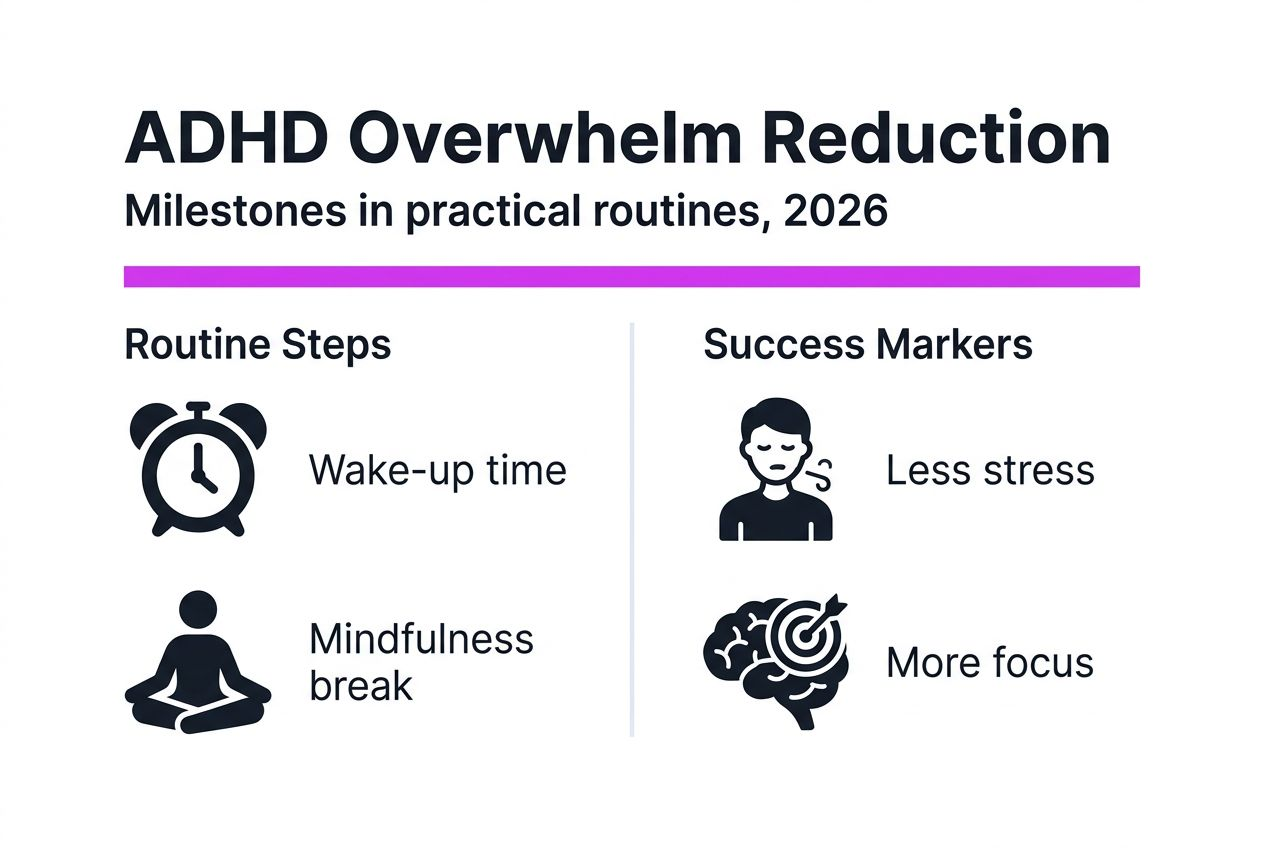
Success metrics include subjective overwhelm scores dropping by 30 to 50%, increased task completion without procrastination, and faster emotional recovery after setbacks. Track these indicators weekly to recognise progress that might otherwise go unnoticed.
Patience and routine adjustments over time maintain gains. As you adapt, your brain builds new neural pathways supporting emotional regulation and attention control. Long-term benefits of sustained calming and organisational routines include reduced anxiety, improved relationships, and greater confidence in managing daily demands.
| Timeline | Expected milestone | Success indicators |
|---|---|---|
| Week 1–2 | Initial routine establishment | Completing 3–5 daily tasks, using calming tools consistently |
| Week 3–4 | Early emotional regulation | Noticing calmer mornings, fewer emotional outbursts |
| Week 5–8 | Measurable overwhelm reduction | 30–50% drop in overwhelm scores, faster task initiation |
| Month 3+ | Sustained improvement | Consistent emotional control, proactive stress management |
Celebrate small wins like remembering to take breaks or organising your essentials without prompting. These incremental changes compound into significant improvements. Explore ADHD self-care suggestions for additional strategies to support ongoing progress.
Explore supportive tools to calm ADHD overwhelm
Building on the strategies shared, consider exploring ADHD-tailored tools that complement your calming routines. Interactive plush companions designed for ADHD minds combine comforting sensory input with practical everyday functions, supporting emotional regulation and reducing mental clutter.

Options include the yellow plush toy for ADHD comfort, which offers calming tactile feedback alongside NFC-enabled digital gifts. The plush toy collection bundle provides variety for those who benefit from rotating sensory tools. Browse Japanese-inspired plush toys for ADHD to find companions that integrate seamlessly into your daily carry while delivering monthly calming audio and mini games to support focus and emotional balance.
Frequently asked questions
How long does it typically take to see improvements after starting calming routines?
Improvements in emotional regulation and reduced overwhelm typically appear between 4 and 8 weeks of consistent practice. Early signs like calmer mornings or easier task initiation may show within 2 to 3 weeks. Consistency and routine adjustment are key for best results, as progress builds gradually rather than overnight.
What are the best digital tools to use for immediate ADHD overwhelm relief?
Tools including calming audio apps, ADHD-tailored mini games, and NFC-enabled interactive companions provide immediate relief. Best results come from ADHD-specific tools designed to account for attention variability and sensory needs. Regular use integrated into calming routines amplifies benefits, so choose tools you find engaging and use them daily.
How can I avoid common mistakes like multitasking that worsen overwhelm?
Focus on single tasks, limit to 3 to 5 per day, and schedule breaks to reduce cognitive overload. Regularly review and adjust your routines monthly to prevent stagnation and support emotional self-awareness. Honouring emotional signals early and responding with calming tools or breaks prevents overwhelm from escalating and maintains sustainable progress.