

For young adults with ADHD, emotional overwhelm can strike without warning, turning minor stressors into major disruptions. Traditional calming methods often fall short because ADHD minds process emotions and sensory input differently. This guide offers practical, ADHD-friendly self-soothing techniques designed to reduce stress, improve focus, and help you regain control when emotions spike.
Table of Contents
- Understanding Self-Soothing And Its Importance For ADHD
- Prerequisites: What You Need Before Starting Self-Soothing Techniques
- Step-By-Step Self-Soothing Routine For ADHD Minds
- Common Mistakes And How To Troubleshoot Them
- Expected Results And How To Measure Your Progress
- Alternative Self-Soothing Methods And Their Tradeoffs
- Safety And Contraindications To Keep In Mind
- Explore Supportive Tools And Resources For ADHD Self-Soothing
- Frequently Asked Questions
Key takeaways
| Point | Details |
|---|---|
| Self-soothing manages ADHD emotional dysregulation | Tailored techniques address unique ADHD challenges like sensory sensitivity and attention variability. |
| Sensory grounding and breathing form core methods | Simple tactile objects, scents, and rhythmic breathing provide immediate calming effects. |
| Consistency beats complexity | Short, regular routines (5-7 minutes) improve adherence and build lasting habits. |
| Track mood for measurable progress | Journals and rating scales boost adherence by 60% and mood improvement by 40% over 8 weeks. |
| Avoid complex routines and substances | Keep steps minimal and never rely on alcohol or caffeine for emotional regulation. |
Understanding self-soothing and its importance for ADHD
Self-soothing means using calming sensory and cognitive techniques to manage your emotional state. For young adults with ADHD, emotional dysregulation is a common challenge that creates stress, distraction, and difficulty maintaining focus throughout the day.
ADHD brains process emotions more intensely and recover more slowly from emotional spikes. This makes traditional advice like “just relax” frustratingly unhelpful. Instead, targeted sensory techniques provide direct calming benefits by engaging the nervous system in ways that suit ADHD neurology.
Research shows that sensory modulation techniques improve emotional regulation significantly in adults with ADHD. Up to 63% of participants report reduced anxiety when using weighted blankets or tactile objects as part of their routine.
The benefits of ADHD-adapted self-soothing include:
- Improved mood stability throughout the day
- Enhanced focus and reduced mental clutter
- Lower stress levels during challenging situations
- Greater sense of control over emotional responses
Understanding that your ADHD brain needs specialised approaches sets the foundation for success. Generic calming advice rarely accounts for attention variability, sensory sensitivity, or the executive function challenges that make sticking to routines harder for ADHD adults.
Prerequisites: what you need before starting self-soothing techniques
Before diving into self-soothing practice, you need the right mindset, environment, and tools. Preparation prevents frustration and increases your chances of building a sustainable routine.
Start by understanding your unique ADHD emotional triggers. Notice when overwhelm typically strikes. Is it during transitions, after sensory overload, or when facing multiple tasks? Recognising patterns helps you anticipate when to use self-soothing techniques.
Gather simple sensory tools that appeal to you:
- Tactile objects like stress balls or textured fidgets
- Scented oils or calming fragrances
- Weighted blankets or lap pads
- Soft fabrics or comforting textures
Choose a practice space with minimal distractions. For ADHD minds, even small interruptions can derail focus. A quiet corner, a tidy room, or a comfortable outdoor spot works well.

Commit to daily practice, even if just five minutes. Consistency builds neural pathways that make emotional regulation easier over time. Consider linking your practice to an existing habit like morning coffee or bedtime routines.
Building emotional resilience for ADHD starts with recognising that your brain needs specific support structures.
Pro Tip: Start with one or two simple tools rather than buying everything at once. Overwhelm from too many options can sabotage your progress before you begin.
Step-by-step self-soothing routine for ADHD minds
An effective ADHD self-soothing routine combines sensory grounding, breathing techniques, and behavioural consistency. Here’s how to build yours:
-
Begin with immediate sensory grounding. Hold a textured object, apply scented oil to your wrists, or wrap yourself in a weighted blanket. Physical sensation anchors your attention and signals your nervous system to calm.
-
Add structured breathing. Try box breathing: inhale for four counts, hold for four, exhale for four, hold for four. Repeat three to five cycles. This rhythmic pattern interrupts stress responses.
-
Incorporate cognitive reframing. After grounding and breathing, name your emotion without judgment. “I’m feeling overwhelmed right now” acknowledges the state without amplifying it.
-
Keep routines short and consistent. Aim for five to seven minutes daily at the same time. ADHD attention spans benefit from brief, regular practice rather than long, irregular sessions.
-
Use digital tools designed for ADHD engagement. Apps with visual timers, calming sounds, or interactive elements maintain focus better than passive meditation recordings.
Research confirms that sensory modulation techniques improve regulation by providing calming input tailored to ADHD sensory processing.
| Technique Type | Primary Benefit | Best Used When | ADHD Suitability |
|---|---|---|---|
| Sensory grounding | Immediate physical calm | Acute stress or overwhelm | Excellent for attention anchoring |
| Cognitive reframing | Reduces thought spirals | After initial calming | Moderate; needs practice |
| Behavioural routines | Builds long-term habits | Daily maintenance | High with external reminders |
For evening practice, explore strategies for bedtime stress relief for ADHD that complement your daytime routine.
Consider interactive toys for ADHD that provide multisensory engagement during your practice. These tools keep hands busy whilst your mind settles.
Pro Tip: Set phone reminders with personalised messages like “Time to ground yourself” rather than generic alerts. Personal connection increases follow-through.
Common mistakes and how to troubleshoot them
Even with good intentions, ADHD adults often stumble when starting self-soothing practices. Recognising these pitfalls helps you avoid frustration and maintain progress.
Starting too ambitiously is the most common mistake. Complex routines with multiple steps overwhelm ADHD executive function. Stick to two or three elements maximum until they become automatic.
Inconsistent practice undermines progress. Without external structure, routines fade quickly. Use visual reminders, habit-stacking, or accountability partners to maintain consistency.
Relying on substances like alcohol or caffeine for calming creates more problems than it solves. These worsen emotional regulation over time and mask underlying needs.
Practising in distracting environments sabotages your efforts. Notifications, visual clutter, or interruptions prevent the focused attention necessary for self-soothing to work.
Key troubleshooting strategies include:
- Track practice times in a simple journal or app
- Set multiple reminders throughout the day
- Start with just one technique until it becomes habitual
- Create a dedicated, distraction-free practice space
- Review weekly progress to identify patterns
Learning to strengthen your emotional resilience requires patience with yourself when mistakes happen. ADHD brains need more external structure and self-compassion than neurotypical approaches suggest.
Pro Tip: Keep a mood rating (1-10) before and after each practice session. Seeing tangible improvement, even small, motivates continued effort when ADHD makes consistency challenging.
Expected results and how to measure your progress
Understanding realistic timelines prevents discouragement. Most people notice initial benefits within four to eight weeks of consistent practice, though individual experiences vary.
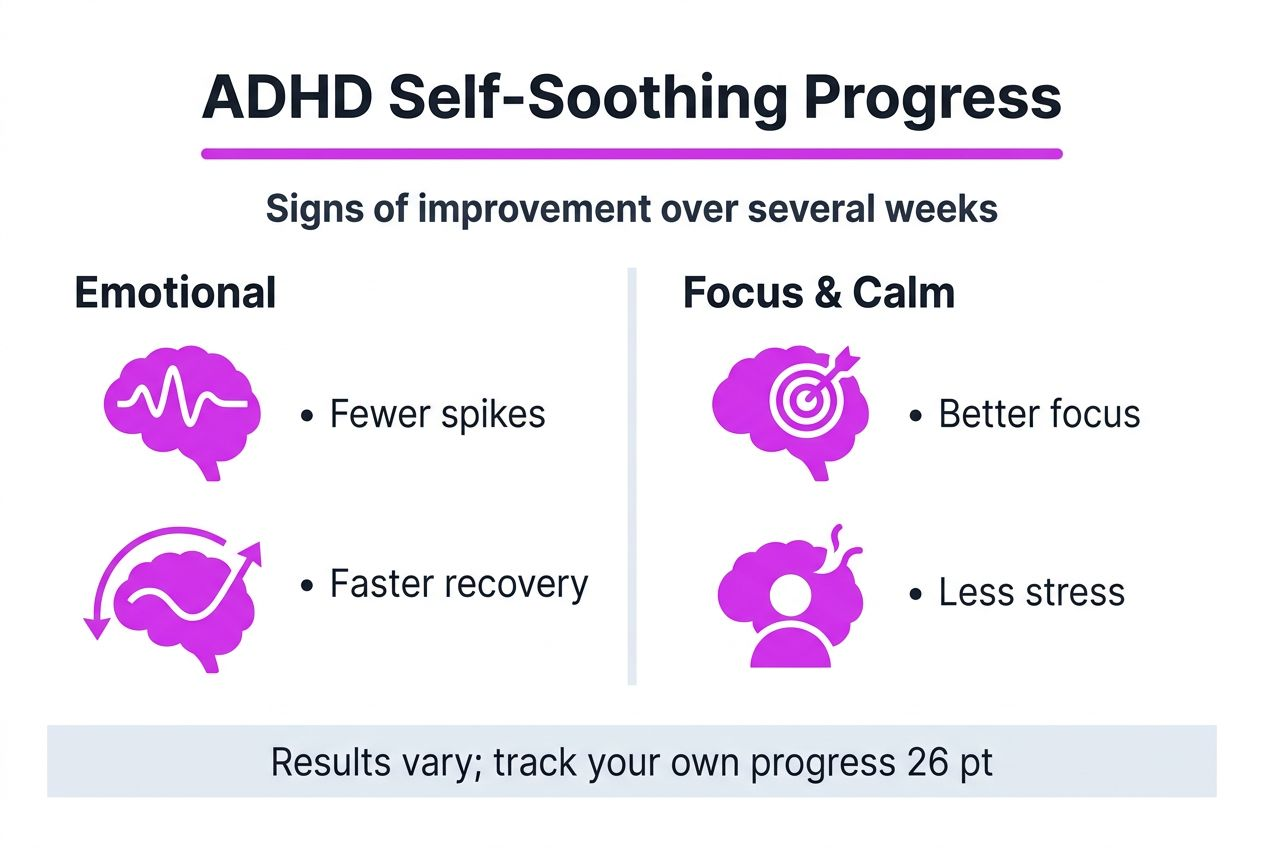
You’ll likely observe subtle changes first: slightly better recovery from emotional spikes, moments of greater calm during stressful situations, or improved sleep quality. These small wins accumulate into significant emotional regulation improvements.
Tracking progress systematically increases both adherence and outcomes. Research shows that mood journals improve adherence by 60% and mood scores by 40% over eight weeks in ADHD populations.
Use these measurement strategies:
- Daily mood ratings (1-10 scale) before and after practice
- Weekly stress level assessments
- Count of emotional spikes per week
- Quality of focus ratings during work or study
| Week | Mood Rating | Stress Level | Emotional Spikes | Focus Quality |
|---|---|---|---|---|
| 1 | 5/10 | 8/10 | 12 | 4/10 |
| 4 | 6/10 | 6/10 | 8 | 6/10 |
| 8 | 7/10 | 5/10 | 4 | 7/10 |
This sample template shows typical progress patterns. Your numbers will vary, but the trend towards improvement matters more than specific scores.
Look for these positive markers: fewer intense emotional reactions, quicker recovery from stress, better ability to focus during challenging tasks, and increased confidence in managing difficult moments.
Alternative self-soothing methods and their tradeoffs
Whilst sensory grounding and breathing form the foundation, other approaches suit different preferences and situations. Understanding tradeoffs helps you choose what fits your lifestyle.
Mindfulness meditation offers cognitive calming through focused attention. However, longer sessions risk attention drift for ADHD minds. Five to seven minute guided meditations work better than 20 to 30 minute silent practices.
Digital interactive companions provide multisensory engagement with ongoing support. These combine tactile, visual, and auditory elements in ways that maintain ADHD attention better than single-mode interventions.
Sensory grounding objects enable immediate physical calming with minimal setup. Simple tactile tools like fidgets or textured items work anywhere, making them practical for on-the-go regulation.
Traditional cognitive behavioural techniques help reframe thought patterns but require significant executive function. They work best after initial sensory calming rather than as first-line interventions.
| Method | Ease of Use | ADHD Engagement | Immediate Impact | Long-term Benefit |
|---|---|---|---|---|
| Mindfulness meditation | Moderate | Low to moderate | Moderate | High with adaptation |
| Digital companions | High | High | High | High |
| Sensory objects | Very high | High | Very high | Moderate |
| CBT techniques | Moderate | Moderate | Low | High |
Key considerations for each approach:
- Mindfulness: Best for structured practice times, less effective during acute stress
- Digital tools: Excellent engagement but requires device access and battery life
- Sensory objects: Highly portable and immediate but may need variety to prevent habituation
- CBT: Powerful for thought patterns but demands mental energy ADHD minds often lack during overwhelm
Explore comparisons between plush and digital ADHD aids to understand which format suits your sensory preferences and lifestyle needs.
Safety and contraindications to keep in mind
Whilst self-soothing techniques are generally safe, certain practices and situations require caution. ADHD adults face specific risks that neurotypical advice often overlooks.
Never use substances like alcohol or caffeine as calming tools. These create dependency, worsen emotional dysregulation over time, and interfere with sleep quality. They mask symptoms rather than building genuine regulation skills.
Some sensory tools may cause over-stimulation or discomfort. Weighted blankets that are too heavy, scents that trigger headaches, or textures that irritate rather than soothe defeat the purpose. Start gently and adjust based on your response.
ADHD-specific adaptations prevent frustration and failure. Generic meditation or breathing instructions often assume neurotypical attention spans and sensory processing. If a technique consistently feels impossible rather than challenging, it’s not suited to your neurology.
Seek professional guidance if self-soothing worsens your emotional state or shows no improvement after eight weeks of consistent practice. Underlying conditions like anxiety disorders, depression, or trauma may require specialised intervention.
Caution: Maladaptive calming methods like substance use, excessive screen time, or emotional avoidance provide temporary relief whilst worsening long-term regulation. True self-soothing builds skills rather than creating dependencies.
Watch for signs that professional support is needed: increasing emotional volatility, self-harm urges, inability to function in daily activities, or persistent hopelessness despite self-care efforts.
Explore supportive tools and resources for ADHD self-soothing
Building effective self-soothing routines becomes easier with tools designed specifically for ADHD minds. Sensory objects, interactive companions, and digital resources provide the structure and engagement ADHD brains need.

Explore the MOMORO store for sensory-friendly tools that combine tactile comfort with practical functionality. Interactive companions offer multisensory engagement whilst supporting your daily routines, helping you maintain calm focus throughout the day.
Specialised items integrate calming sensory input with everyday utility. This dual function reduces clutter and decision fatigue whilst ensuring your self-soothing tools are always accessible when overwhelm strikes.
Consider trying tools that fit naturally into your existing habits. The easier a calming resource is to access and use, the more likely you’ll maintain consistent practice even when ADHD makes routines challenging.
Frequently asked questions
How long does it take to notice benefits from self-soothing with ADHD?
Typically, four to eight weeks of consistent daily practice is needed to observe clear benefits. Progress varies individually based on technique selection and adherence. Regular use matters more than perfection, so focus on building the habit even when results feel slow.
What simple sensory tools work best for quick calming?
Tactile objects like textured fidgets, scented oils, and weighted blankets provide proven soothing effects. Interactive sensory toys offer engaging distraction whilst calming your nervous system. Choose tools that appeal to your specific sensory preferences for best results.
Can mindfulness meditation work for ADHD self-soothing?
Short, guided meditations of five to seven minutes are more effective for ADHD focus than longer sessions. Extended silent meditation often causes attention drift, reducing benefits. Look for ADHD-adapted practices with structure, variety, and clear endpoints to maintain engagement.
When should I seek professional support alongside self-soothing?
Seek help if emotional dysregulation worsens or shows no improvement after eight weeks of consistent self-soothing practice. Professional guidance ensures safety and provides tailored interventions when self-care techniques alone aren’t sufficient for your needs.