

Work life can quickly feel overwhelming when everyday stressors spark intense emotional reactions, especially for young British professionals with ADHD. Navigating demanding tasks, constant notifications, and social pressures often leads to frustration or anxiety that derails your focus. Building emotional resilience strategies helps you identify triggers, create a calmer workspace, and develop habits that make setbacks easier to manage, so you can thrive even on the toughest days.
Table of Contents
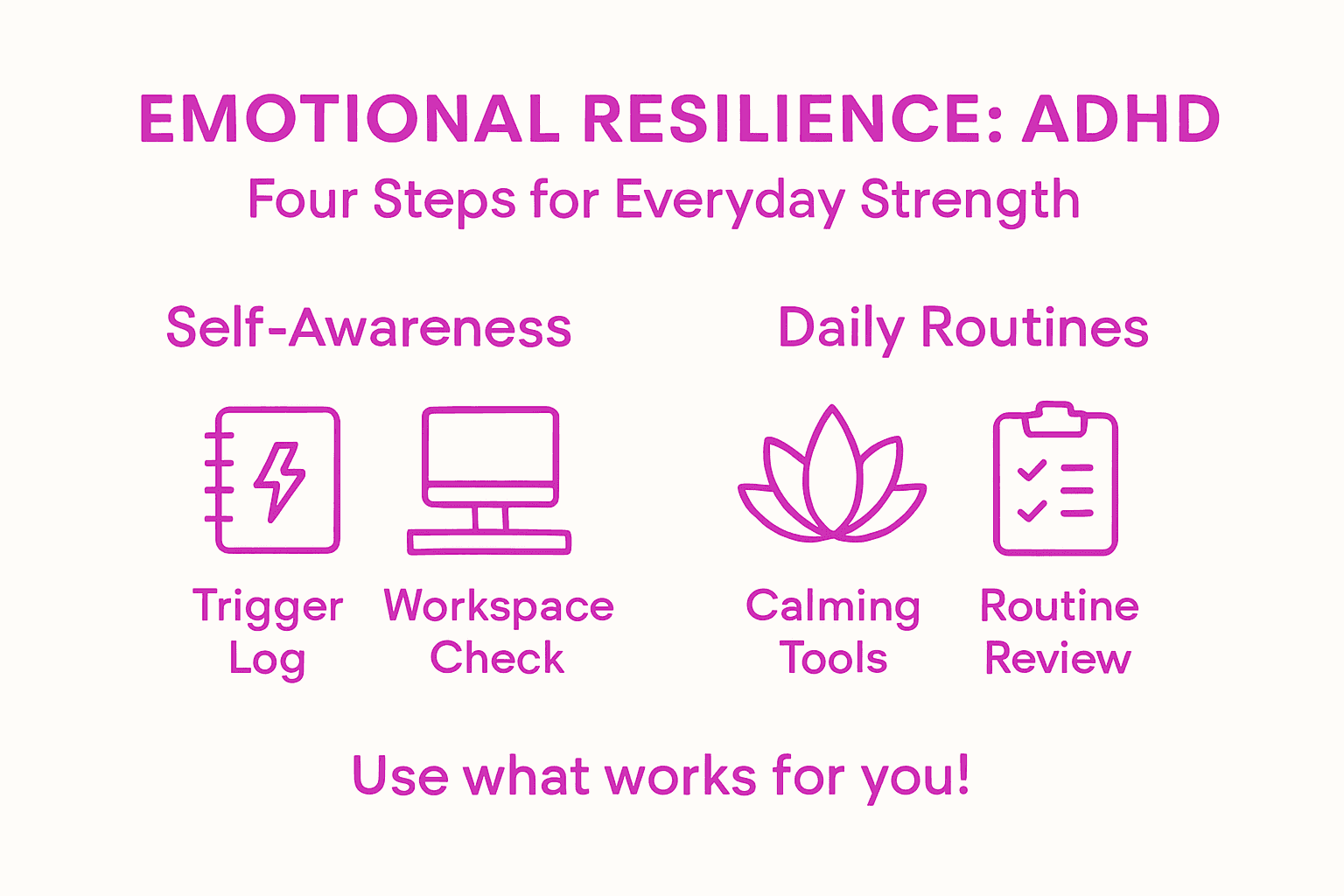
- Step 1: Assess Your Emotional Triggers And Workspace
- Step 2: Integrate Calming Tools And Routines For Focus
- Step 3: Apply Resilience-Building Strategies Daily
- Step 4: Evaluate Progress And Adapt Your Support Systems
Quick Summary
| Key Point | Explanation |
|---|---|
| 1. Identify Emotional Triggers | Recognise what sets off your emotional responses, allowing you to notice patterns and areas needing adjustment. |
| 2. Optimise Your Workspace | Assess and modify your environment to reduce distractions and support calmness, enhancing emotional regulation. |
| 3. Build Calming Routines | Develop consistent micro-routines that help signal your brain for focus and reduce mental fatigue. |
| 4. Apply Daily Resilience Strategies | Implement habits to strengthen emotional resilience, allowing for quicker recovery from setbacks. |
| 5. Regularly Evaluate Progress | Continually assess what strategies are effective, adapting your support systems to better fit your needs. |
Step 1: Assess your emotional triggers and workspace
This step helps you identify what sets you off emotionally and evaluate whether your physical environment is helping or hindering your ability to stay calm. You’re essentially creating a map of your emotional landscape and spotting where adjustments are needed.
Start by recognising your personal triggers. ADHD brains often experience intense emotional responses that feel disproportionate to the situation. Common triggers for young professionals include missed deadlines, interruptions during focus time, rejection or criticism, unclear expectations, and sensory overload (loud offices, constant notifications). Spend a few days noticing which moments make you feel frustrated, anxious, or overwhelmed.
Write down what you notice:
- What were you doing when the feeling hit?
- What happened right before?
- How did your body feel (tight chest, racing thoughts, clenched jaw)?
- How intense was the reaction (1-10)?
This isn’t about judging yourself. It’s about seeing patterns. If you notice you crash every Friday afternoon or snap at colleagues after back-to-back meetings, that’s valuable data.
Now assess your workspace. Your environment massively impacts emotional regulation. Look at these areas:
- Sensory inputs: Is your desk too loud, too bright, too cluttered? Can you control temperature or lighting?
- Visual chaos: Does clutter create mental fog? Can you clear your desk down to essentials?
- Break access: Can you step away easily when you need to decompress?
- Notification overload: Are Slack messages, emails, and calls constantly grabbing attention?
- Comfort items: Do you have calming tools nearby (headphones, stress relief items, or a quiet spot)?
Small workspace tweaks work wonders. Move to a quieter corner if possible. Use noise-cancelling headphones. Hide notifications during focus blocks. Keep a stress ball or fidget item within reach.
Your triggers aren’t character flaws—they’re signals. Your workspace either amplifies or dampens them. Getting both right transforms how you handle stress.
Pro tip: Create a simple “trigger log” for two weeks: jot down what triggered you, rate the intensity 1-10, and note what helped you recover. Patterns emerge fast, and you’ll spot which workspace changes matter most.
Step 2: Integrate calming tools and routines for focus
This step is about building a sustainable system that keeps you regulated throughout your workday. You’re essentially creating scaffolding that supports focus without relying on willpower alone.
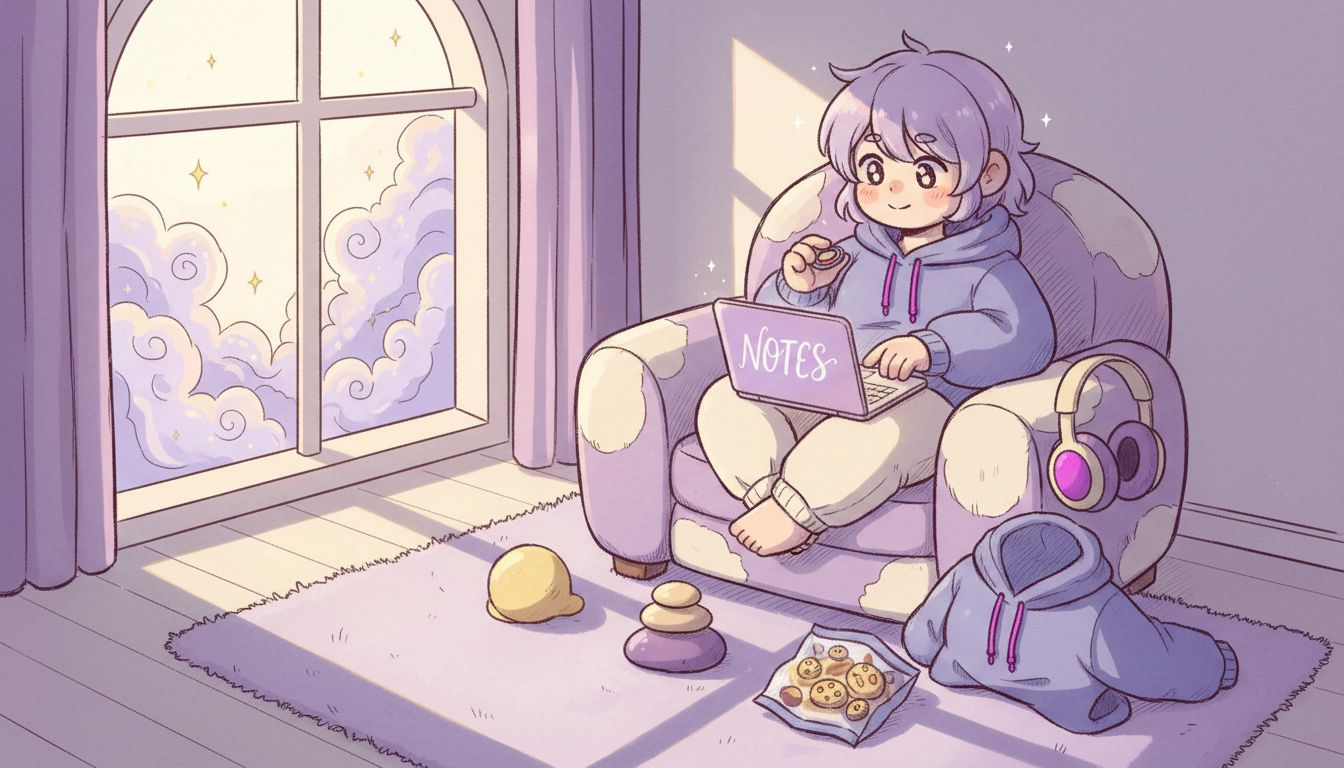
Start by identifying which calming tools actually work for you. Not everything works for everyone, and that’s fine. Some people need sensory input (fidget tools, textured items), others need audio support (ambient sounds, music), and some need movement or tactile comfort. Think about what naturally settles your nervous system when you’re wound up. Is it holding something cool? Listening to lo-fi beats? Taking a short walk?
Next, build consistent micro-routines around focus blocks. A routine doesn’t mean rigid or complicated. It means doing the same small thing before you shift into deep work. This could be a 2-minute breathing exercise, putting on specific headphones, moving to a dedicated workspace corner, or holding a calming object. Your brain starts recognising the signal and actually prepares for focus.
Here’s what integration looks like in practice:
- Morning anchor: Start your workday with one calming action (make tea, five conscious breaths, listen to a specific song)
- Between-meeting reset: Have a 60-second routine that helps you shake off one meeting before the next (stretch, step outside, hold a stress ball)
- Deep work ritual: Use the same tools and environment each time you focus on important tasks
- End-of-day wind-down: Close work with a brief routine that signals to your brain work is done
Many people find that having calming routines creates structure without feeling restrictive. Keep your tools visible and accessible. If you hide them, you’ll forget to use them when stressed.
Below is a quick comparison of popular calming tools and their typical impact on ADHD emotional regulation:
| Calming Tool | Sensory Focus | Typical Purpose |
|---|---|---|
| Noise-cancelling headphones | Auditory | Reduce external distractions |
| Fidget tools | Tactile | Channel excess energy |
| Ambient music | Auditory | Create soothing work ambience |
| Stress ball | Tactile | Relieve tension during stress |
| Dedicated focus corner | Environmental | Signal for deep concentration |
The trick is making these routines automatic so they don’t require decision-making when you’re already dysregulated. Stack them onto things you already do (after you check emails, before you start coding, during lunch).
Routines aren’t rigid rules. They’re gentle anchors that help your ADHD brain shift gears without burning mental energy on decisions.
Pro tip: Start with just one micro-routine and practise it for a full week before adding another. Consistency beats perfection. Once it becomes automatic (usually 10–14 days), add the next one. Small stacks build faster than trying to overhaul everything at once.
Step 3: Apply resilience-building strategies daily
This step transforms resilience from theory into daily practice. You’re building small, repeatable habits that strengthen your emotional capacity over time, making setbacks feel less catastrophic.
Resilience isn’t about never struggling or always staying positive. It’s about how you respond when things go sideways. Practising perspective taking and self-care helps you navigate stress without harsh self-judgment. Start by noticing your automatic thoughts when something goes wrong. Did you miss a deadline? Your brain might say “I’m a failure.” That’s the moment to practise perspective.
Here’s what daily resilience-building looks like:
- Morning reflection (2 minutes): Name one strength you have and one thing you’re managing today
- Mid-day check-in: Notice stress rising without criticising yourself for feeling it
- Evening review: What went well today, even something tiny? What did you handle, despite difficulty?
- Reframe setbacks: When something fails, ask “What can I learn?” instead of “What’s wrong with me?”
The key is consistency over perfection. You’re not aiming for constant positivity. You’re building the muscle to bounce back faster when you dip. After a rough meeting, you recover in hours instead of days. After a mistake, you move forward without spiralling.
Integrate these into existing routines. During your morning coffee, do the reflection. Between tasks, do the check-in. Before bed, review the day. You’re piggybacking resilience work onto things you already do, so it doesn’t feel like extra effort.
Supportive relationships matter too. Share your wins and struggles with people who get it. That might be a colleague, friend, or even an online community of people with ADHD. You’re not building resilience in isolation.
Resilience isn’t about being tough or never struggling. It’s about getting back up faster and treating yourself kindly whilst you do.
Pro tip: Keep a simple resilience log: each evening, write one thing you handled well today, no matter how small. After two weeks, you’ll have a visible list of your own strength. Reread it when you’re doubting yourself.
Step 4: Evaluate progress and adapt your support systems
This step is about checking what’s working and adjusting what isn’t. Your emotional resilience system isn’t static, so regular evaluation keeps it relevant to your actual life.
Start by tracking what matters. For two weeks, notice which strategies actually helped when you were stressed. Did that breathing exercise calm you? Did hiding notifications improve focus? Did certain times of day feel harder? This isn’t about rigid data collection, just honest observation. Your trigger log from Step 1 becomes your baseline for comparison.
Look for patterns in how you’re responding to stress now versus before you started. Are you recovering faster from setbacks? Noticing emotions without spiralling? Handling rejection sensitivity differently? Monitoring emotional responses and recognising patterns empowers you to make informed adjustments.
Evaluate specific areas:
- What’s actually helping: Which calming tools do you reach for? Which routines feel natural?
- What’s fallen away: Did you abandon something that was working? Why (too complicated, didn’t feel useful, life changed)?
- What’s missing: Are there situations where you still struggle with no support system in place?
- What’s changed: Has your workplace, schedule, or stress level shifted? Your system needs to adapt too.
Adapt based on what you learn. If noise-cancelling headphones transformed your focus but breathing exercises felt forced, ditch the breathing and double down on audio. If your morning routine works perfectly but your afternoon slump is brutal, add an afternoon reset. Small adjustments beat abandoning everything.
Involve people you trust. Share your observations with a colleague, friend, or therapist. They might spot patterns you missed or offer ideas you hadn’t considered. Support systems work better when they’re not built in isolation.
Here is a summary of steps for reviewing and adapting your ADHD support system over time:
| Review Step | Key Focus Area | Adjustment Example |
|---|---|---|
| Notice effectiveness | Track which tools help | Keep trigger log and monitor improvements |
| Identify gaps | Find missing supports | Add new routines for tough periods |
| Adapt strategies | Refine existing methods | Replace forced routines with what works |
| Involve others | Seek external feedback | Ask trusted colleagues for observations |
Progress isn’t linear, and what works today might need tweaking in three months. That’s not failure—that’s you getting smarter about yourself.
Pro tip: Schedule a 15-minute “support system review” every four weeks. Same day, same time. Quickly note what helped, what didn’t, and one small change to make. Consistency in reviewing beats sporadic overhauls.
Empower Your Emotional Resilience with MOMORO: A Support System Designed for ADHD Minds
Managing emotional triggers and creating calming routines are essential steps for building resilience as outlined in the article “How to Empower Emotional Resilience for ADHD Minds”. The challenges of emotional overload, sensory distractions, and the need for consistent support tools are real pain points for many with ADHD. MOMORO perfectly complements these needs by offering a 5-in-1 interactive companion that helps reduce overwhelm and supports emotional regulation throughout the day.

Discover how MOMORO’s NFC-enabled collectible plush unlocks monthly calming gifts like focus-enhancing audio and mini games designed specifically for ADHD minds. It also serves as a practical everyday essential with a phone holder, keychain, headphone holder, and detachable wallet that keeps your focus tools within easy reach. Build your own calming routines and create a personal support system that adapts with you. Take the next step towards calmer focus and emotional balance by visiting MOMORO store and explore our unique solutions crafted for busy, neurodivergent lifestyles. Don’t wait to transform how you manage stress and stay centred every day.
Frequently Asked Questions
How can I identify my emotional triggers related to ADHD?
To identify your emotional triggers, spend a few days observing situations that provoke frustration, anxiety, or overwhelm. Write down what you were doing, what led up to the feeling, and how intense your response was, rating it from 1 to 10.
What are effective calming tools for managing ADHD-related stress?
Effective calming tools can include sensory items like fidget tools, auditory supports like ambient music, or even a dedicated focus corner. Experiment with different tools to see which one helps ease your nerves, and aim to establish a consistent routine around using these tools daily.
How can I build resilience on a daily basis for my ADHD?
Building resilience involves creating repeatable habits that help you respond better to stress. Incorporate activities like morning reflections or evening reviews to acknowledge your strengths and progress, doing this daily to train your mind to recover faster from setbacks.
What steps should I take to assess my progress in strengthening emotional resilience?
After two weeks, review what strategies have benefited you and which have not. Track which calming tools you consistently use and make adjustments as needed to enhance your support system based on your observations.
How can I involve others in my journey to enhance emotional resilience?
Involving others can provide valuable feedback and support. Share your experiences with trusted friends or colleagues and ask for their insights on your progress to spot patterns you might have missed.