

You’ve tried every stress hack, yet your mind still races and focus slips away. Generic advice doesn’t work when your brain processes stress differently. This guide offers a tailored, step-by-step workflow designed specifically for young adults with ADHD or anxiety who need practical strategies to improve emotional regulation and concentration in their daily lives.
Table of Contents
- Understanding Stress And ADHD/Anxiety
- Prerequisites: What You Need Before Starting
- Building Your Step-By-Step Stress Management Workflow
- Common Mistakes And How To Fix Them
- Expected Results And How To Measure Success
- Discover Tailored Tools For Your Stress Management Journey
- FAQ
Key takeaways
| Point | Details |
|---|---|
| Tailored workflows outperform generic methods | Structured workflows improve ADHD focus by 30%-50% when designed for neurological differences |
| Prerequisites matter | Distraction-free spaces and calming tools create the foundation for success |
| Sequential steps reduce overwhelm | Calming breaks combined with physical organisation support focus and emotional balance |
| Common pitfalls sabotage progress | Skipping breaks and multitasking reduce effectiveness by up to 30% |
| Results take consistency | Measurable improvements typically appear within 3-4 weeks of daily adherence |
Understanding stress and ADHD/anxiety
Your brain isn’t broken. It’s wired differently, which means stress hits harder and lingers longer. ADHD and anxiety increase vulnerability to stress through neurological differences in executive function and emotional regulation. When stress strikes, it worsens the very symptoms you’re already managing, creating a frustrating cycle.
Generic stress management fails because it doesn’t account for ADHD and anxiety-specific needs. Telling someone with ADHD to “just relax” is like telling someone with poor eyesight to “just see better.” Your brain requires structured support, not vague advice.
Structured calming breaks improve focus because they work with your neurology, not against it. These tailored workflows acknowledge your brain’s need for novelty, movement, and frequent resets. Understanding this connection empowers you to build empowering emotional resilience for ADHD through targeted strategies.
Key neurological factors include:
- Reduced dopamine availability affects motivation and reward processing
- Heightened amygdala reactivity intensifies emotional responses to stressors
- Executive dysfunction makes planning and prioritising stress management difficult
- Sensory sensitivities amplify environmental stressors that others might ignore
Pro Tip: Track your stress triggers for one week before starting any workflow. Notice patterns in time of day, environment, and activities. This awareness helps you customise your approach.
Prerequisites: what you need before starting
Jumping into a new system without proper setup guarantees frustration. You need the right environment, tools, and mindset before implementing any stress management workflow.
Create a distraction-free environment with minimal sensory overload. This doesn’t mean complete silence, but rather controlling your sensory input. Dim harsh lighting, remove visual clutter, and identify a space where interruptions are minimal.
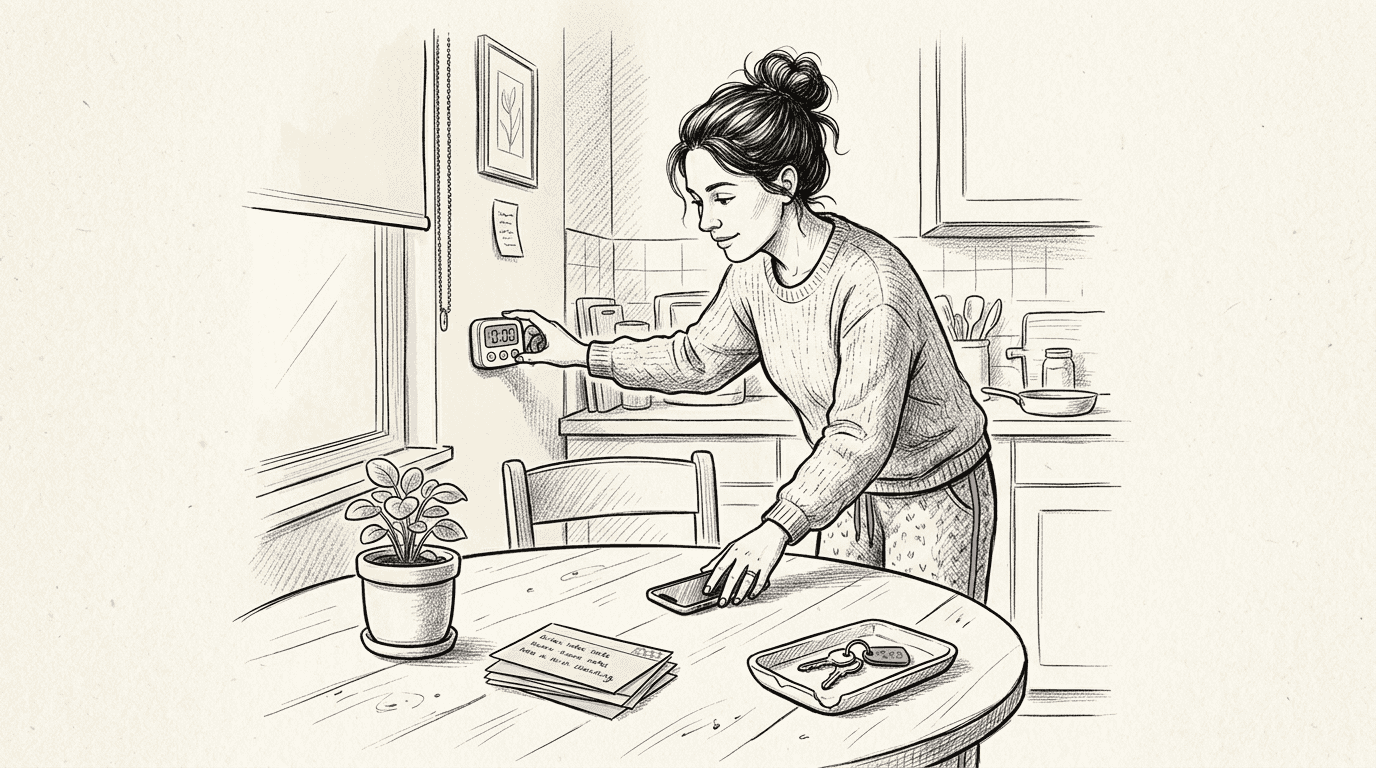
Physical organisation tools reduce mental clutter by giving everything a designated place. When you’re not searching for your keys or headphones, your brain has more capacity for emotional regulation. Gathering these essentials beforehand removes friction from your daily routine.
Calming digital tools like focused audio tracks and micro-games provide immediate regulation support. These aren’t distractions but neurological aids that help your brain shift gears. Access to self-soothing practices for ADHD enhances your toolkit.
Consistent daily routines build habit strength through repetition. Your ADHD brain thrives on external structure even when internal organisation feels impossible. Committing to specific times for stress management activities creates neural pathways that make adherence easier over time.
Essential prerequisites include:
- Designated calm space with controllable sensory input
- Physical organisation tools for keys, wallet, phone, and headphones
- Digital access to calming audio and engaging micro-activities
- Time blocked in your calendar for daily stress management sessions
- Basic understanding of ADHD anxiety management steps 2026 tailored to your needs
Pro Tip: Prepare your space and tools the night before. Morning resistance is real, so remove every possible barrier between you and your stress management routine.
Building your step-by-step stress management workflow
A sequential workflow transforms vague intentions into concrete actions. Each step builds on the previous one, creating a neurological pathway that becomes automatic with repetition.
Step 1: Establish your foundation. Set a specific location and fixed times for stress management activities. Consistency trains your brain to anticipate and prepare for these moments. Choose times when your energy naturally dips, typically mid-morning or mid-afternoon.
Step 2: Begin with neurological engagement. Start each session with calming audio designed for ADHD focus followed by brief micro-games. This combination activates your brain’s attention systems whilst providing the novelty your ADHD mind craves. Five to ten minutes suffices.
Step 3: Integrate physical organisation. Use your keychain holder, wallet, and phone holder to create visual order. This tangible organisation mirrors the internal organisation you’re building. Physical actions ground your nervous system.
Step 4: Maintain engagement through variety. Monthly NFC-enabled calming gifts introduce fresh content without requiring you to seek it out. Novelty sustains interest where routine alone might fail. Explore interactive toys for ADHD to understand this principle.
Step 5: Protect single-task focus. Avoid multitasking during your stress management sessions. Your brain cannot simultaneously calm and plan your evening. Set alarms to maintain consistent timing and prevent session drift.
| Step | Purpose | Benefit |
|---|---|---|
| Fixed location and timing | Creates environmental cues for calming | Reduces decision fatigue and resistance |
| Calming audio and micro-games | Engages attention and dopamine systems | Improves focus readiness by 30%-50% |
| Physical organisation tools | Reduces mental clutter and search time | Decreases overwhelm and cognitive load |
| Monthly fresh content | Maintains novelty and prevents boredom | Sustains long-term adherence and interest |
| Single-task focus | Protects neurological recovery process | Maximises effectiveness of each session |
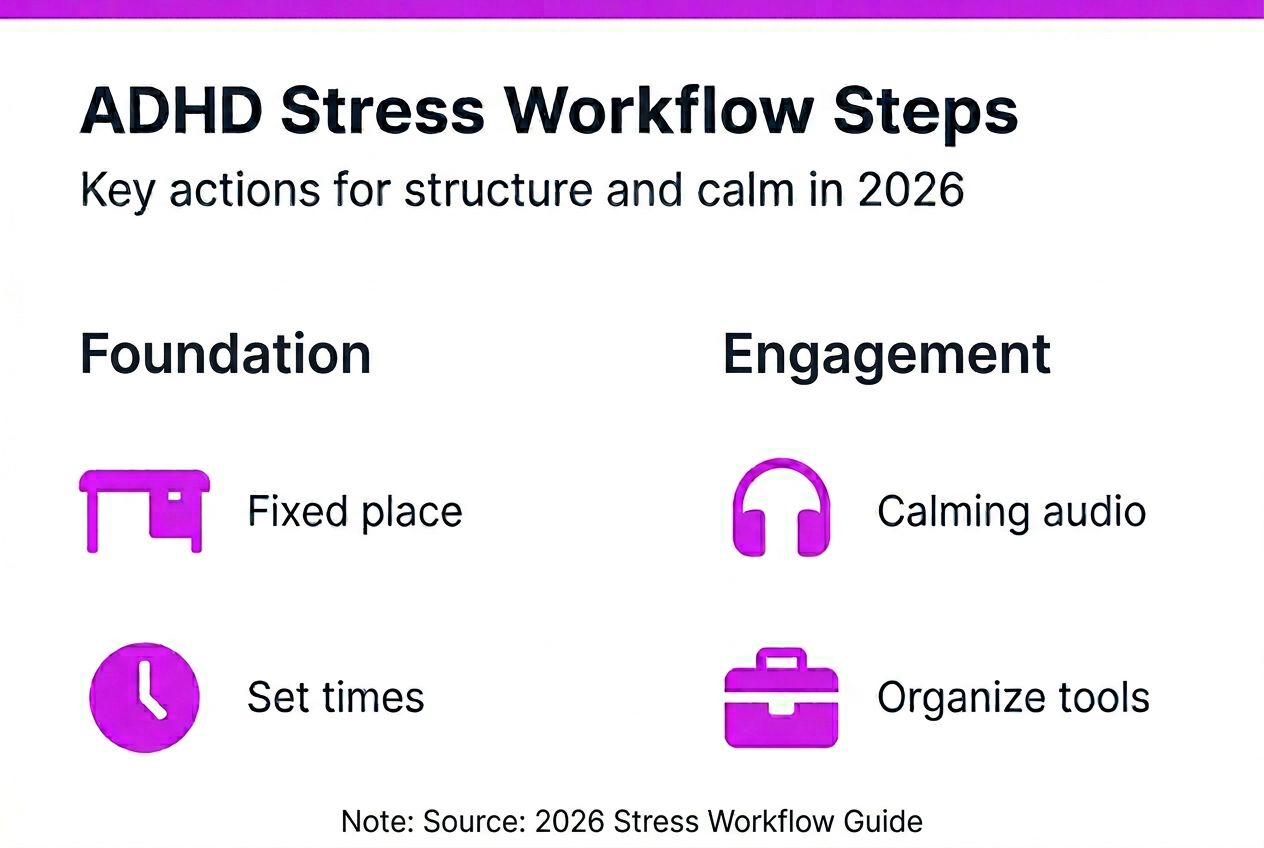
This cyclical workflow maximises focus recovery because it addresses multiple ADHD needs simultaneously: structure, novelty, sensory engagement, and physical grounding. Implementation of practical ADHD routines 2026 reinforces these principles across your entire day.
Pro Tip: Use phone alarms labelled with the specific step, not just “stress break.” Seeing “Step 2: Calming Audio” reminds you exactly what to do, reducing executive function demands.
Common mistakes and how to fix them
Even well-designed workflows fail when you fall into predictable traps. Recognising these patterns helps you course-correct quickly rather than abandoning the entire system.
Skipping calming breaks reduces effectiveness significantly. When you’re stressed, breaks feel counterproductive, yet they’re precisely when your brain needs them most. Missing breaks compounds stress and diminishes your ability to focus later. Solution: Set non-negotiable alarms that interrupt whatever you’re doing.
Multitasking during calming activities increases cognitive overload. Checking your phone whilst listening to calming audio defeats the entire purpose. Your attention cannot split effectively, especially with ADHD. Solution: Physically place your phone across the room or use app blockers during sessions.
Inconsistent routine adherence diminishes long-term progress. Doing your workflow three days one week and zero the next prevents habit formation. Your brain needs repetition to build neural pathways. Solution: Track completion visually with a habit tracker that provides immediate satisfaction.
Environmental preparation neglect creates unnecessary barriers. Starting your session and realising your headphones are in another room adds friction that makes quitting easier. Solution: Create a dedicated stress management kit with all tools in one place.
“When you skip breaks to ‘stay productive,’ you’re actually reducing your brain’s capacity to focus effectively. Consistency in rest creates consistency in performance.”
Common workflow saboteurs include:
- Expecting immediate results and quitting after three days
- Comparing your progress to neurotypical peers’ stress management
- Adding too many steps at once instead of building gradually
- Ignoring sensory needs like lighting, temperature, or background noise
- Forgetting to adjust the workflow as your needs change
Implementing ADHD daily improvements workflow principles helps you identify and correct these mistakes before they derail your progress. Remember that perfect adherence isn’t the goal. Returning to the workflow after missing a day matters more than never missing one.
Expected results and how to measure success
Realistic expectations prevent premature discouragement. Your brain needs time to adapt to new patterns, especially when rebuilding stress response systems.
Focus and emotional regulation typically improve within three to four weeks of consistent workflow use. You’ll notice smaller improvements first: slightly longer attention spans, marginally quicker emotional recovery, or reduced overwhelm in familiar situations. These small wins compound.
Anxiety symptoms can reduce by 15% to 40% when tailored calming tools are regularly used. This range reflects individual differences in anxiety severity, co-occurring conditions, and adherence consistency. Even modest reductions significantly impact daily functioning.
Physical organisation tools decrease feelings of overwhelm measured through self-report. When you know exactly where your essentials are, you eliminate dozens of small stressors daily. These micro-improvements create mental space for larger emotional regulation.
Tracking methods provide concrete evidence of progress when subjective feelings fluctuate:
- Daily task completion rates in work or study contexts
- Mood logging using simple numerical scales or emoji trackers
- Weekly self-assessment of focus duration and quality
- Anxiety symptom checklists completed bi-weekly
- Physical markers like sleep quality or appetite stability
| Metric | Measurement Method | Expected Timeline | Typical Improvement |
|---|---|---|---|
| Focus duration | Timed work sessions | 2-3 weeks | 25%-40% increase |
| Emotional recovery speed | Mood log after stressors | 3-4 weeks | 30%-50% faster |
| Anxiety symptom severity | Weekly symptom checklist | 4-6 weeks | 15%-40% reduction |
| Task completion rate | Daily tracker | 2-3 weeks | 20%-35% increase |
| Overwhelm frequency | Self-report rating | 3-5 weeks | 25%-45% decrease |
Patience and consistency are essential. Your ADHD brain might want instant transformation, but sustainable change happens gradually. Celebrate small wins: noticing stress earlier, returning to calm five minutes faster, or remembering your workflow without prompting. These incremental improvements signal that your neurological pathways are strengthening.
Discover tailored tools for your stress management journey
Building an effective stress management workflow becomes easier when you have tools designed specifically for ADHD minds. Momoro offers a 5-in-1 interactive companion that combines calming digital tools with everyday functionality to reduce stress and mental clutter.

Each Momoro companion includes monthly calming gifts through NFC technology, providing fresh focusing audio and mini-games without requiring you to search for new content. The integrated keychain, phone holder, and detachable wallet keep your essentials organised in one place, reducing the daily mental load that compounds stress.
Explore the Momoro store homepage to discover how an interactive calming companion fits into your personalised stress management workflow. These tools aren’t replacements for your routine but enhancements that make consistency easier and engagement more sustainable.
FAQ
What is a stress management workflow tailored for ADHD and anxiety?
A structured sequence of calming activities and organisation strategies designed specifically for ADHD and anxiety neurology. It includes timed breaks, sensory regulation tools, physical organisation systems, and engagement techniques that work with your brain’s need for novelty and structure rather than against it.
How long does it take to see improvements using this workflow?
Consistent daily use typically shows noticeable improvements in focus and emotional regulation within three to four weeks. You’ll notice small changes first, like slightly better attention or faster emotional recovery. Significant anxiety reduction and focus improvements become apparent around the four to six week mark with regular adherence.
What are some simple tools I can use daily to stay organised and calm?
Physical items like keychain holders and detachable wallet organisers help reduce mental clutter by giving everything a designated place. Digital calming tools include focused audio tracks designed for ADHD and brief micro-games that engage your attention systems. Interactive or NFC-enabled calming companions boost engagement through monthly fresh content. Explore ADHD daily organisation tools for practical implementation strategies.
How can I avoid common mistakes like multitasking during stress management?
Set specific alarms or reminders that prompt breaks and discourage task-switching during calming sessions. Focus exclusively on one activity at a time and prepare your environment beforehand by gathering all necessary tools in one location. Track your progress visually using a habit tracker to maintain motivation and reinforce routine adherence through immediate satisfaction.