

More than half of British parents report struggling to find calming tools that truly connect with children who have ADHD. Choosing the right support is complicated by myths and confusion about emerging sensory toys. For families seeking effective emotional support and innovative options like NFC-enabled plush collectibles, understanding what really works is key. This guide clears up common misconceptions about sensory plush and reveals why interactive companions are gaining traction across British households.
Table of Contents
- Sensory Plush Explained And Common Myths
- Key Types And Technology Of Sensory Plush
- Benefits For ADHD And Anxiety Relief
- Selecting And Using NFC-Enabled Plush Safely
- Comparisons With Other Sensory Tools
Key Takeaways
| Point | Details |
|---|---|
| Purpose of Sensory Plush | Sensory plush provides targeted sensory input to support emotional regulation and focus, particularly for neurodivergent individuals. |
| Common Misconceptions | Many believe sensory plush is only for extreme sensory needs, but they are beneficial for a wide range of experiences, including mild ADHD and anxiety. |
| Types and Benefits | Various types of sensory plush offer unique features, such as weighted or vibrating options, which cater specifically to children’s sensory processing requirements. |
| Safety Considerations | When using NFC-enabled plush, parents must ensure age appropriateness and adhere to safety regulations to protect children while maximising therapeutic benefits. |
Sensory plush explained and common myths
Sensory plush is much more than a cuddly toy. These specialised interactive companions are carefully designed to provide targeted sensory input for neurodivergent individuals, particularly those managing ADHD. Multisensory engagement plays a crucial role in supporting emotional regulation and focus, helping children navigate overwhelming sensory experiences.
Many people misunderstand sensory plush, believing they are simply distractions or unnecessary accessories. However, research from educational professionals demonstrates that these tools are scientifically validated support mechanisms. They offer carefully calibrated tactile, visual, and proprioceptive stimulation that can:
- Reduce anxiety
- Improve concentration
- Support emotional self-regulation
- Provide predictable sensory feedback
- Create a portable comfort mechanism
Common myths about sensory plush often stem from limited understanding. Some parents believe these tools are only for children with extreme sensory needs, but emerging research shows they can benefit a wide range of neurodivergent experiences. Professional insights reveal that sensory plush can be valuable for children with mild to moderate ADHD, anxiety, and sensory processing differences.
Pro tip: When selecting a sensory plush, prioritise items with varied textures, subtle weight, and soft materials that provide consistent, gentle sensory input.
Key types and technology of sensory plush
Sensory plush technologies have evolved dramatically, transforming from simple cuddly toys to sophisticated therapeutic tools. Advanced sensory plush now incorporate multiple technological features designed to support neurodevelopmental needs, offering targeted sensory experiences for children with ADHD and sensory processing differences.
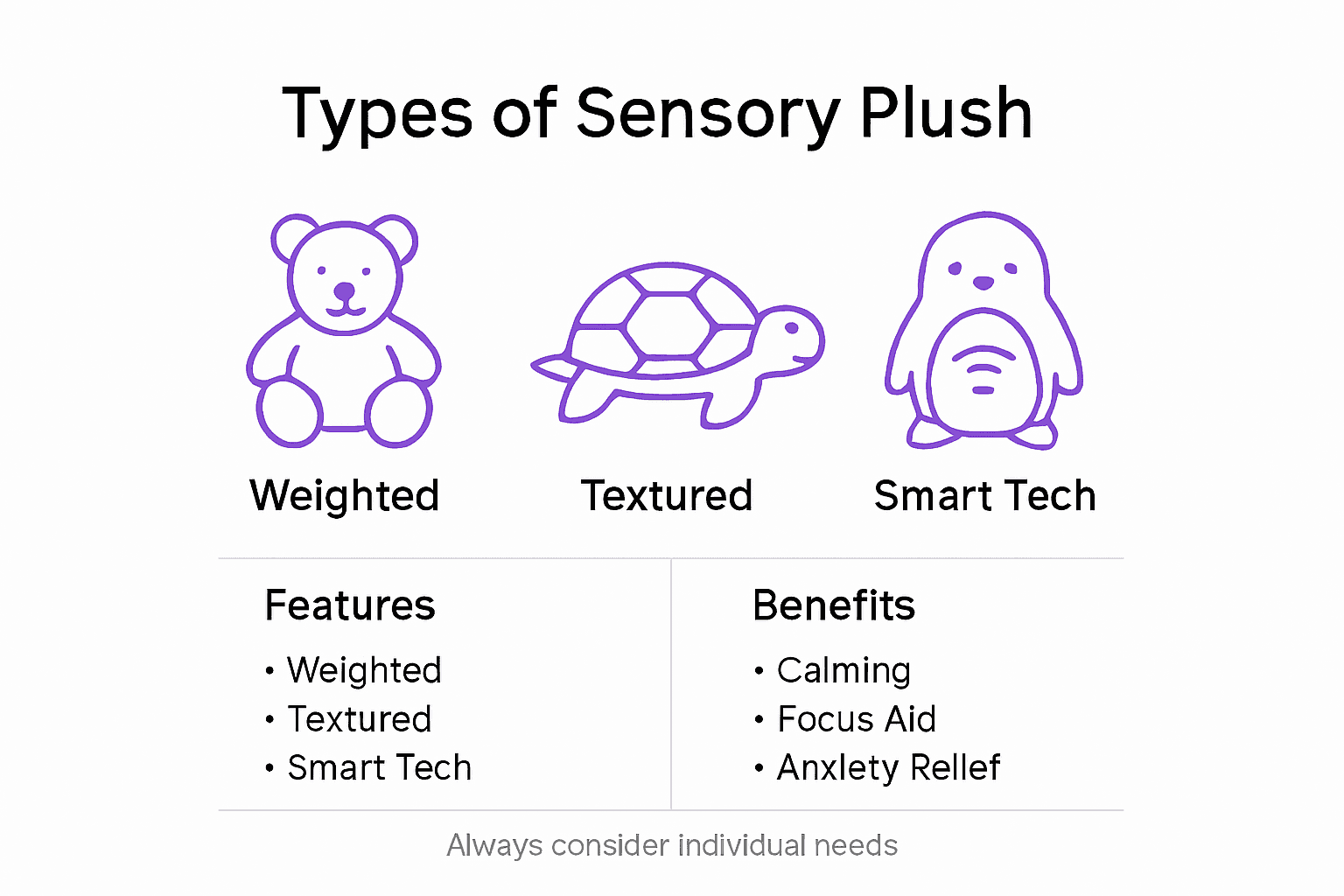
The primary categories of sensory plush can be classified by their core technological and sensory characteristics:
- Weighted Plush: Provide deep pressure stimulation to reduce anxiety
- Vibrating Plush: Offer rhythmic sensory input for emotional regulation
- Light-Emitting Plush: Create visual engagement and predictable sensory feedback
- Interactive Electronic Plush: Include programmable responses and adaptive features
- Textured Sensory Plush: Feature varied surface materials for tactile exploration
Cutting-edge sensory plush technologies now integrate smart fabric technologies and embedded electronic modules that can adapt to individual user needs. These innovations allow for personalised sensory experiences, with some advanced plush capable of monitoring physiological responses and adjusting their sensory output accordingly.
Here is a comparison of core sensory plush features and their targeted therapeutic benefits:
| Sensory Plush Type | Primary Feature | Main Benefit |
|---|---|---|
| Weighted Plush | Deep pressure stimulation | Reduces anxiety and stress |
| Vibrating Plush | Rhythmic gentle movement | Encourages emotional calm |
| Light-Emitting Plush | Soft visual illumination | Enhances sensory focus |
| Interactive Electronic | Programmable responses | Personalises engagement |
| Textured Sensory Plush | Variety of tactile surfaces | Promotes sensory exploration |
Pro tip: When selecting a sensory plush, test different technological features and observe how your child responds to ensure the most effective sensory support.
Benefits for ADHD and anxiety relief
Scientific research demonstrates profound benefits of sensory plush for children managing ADHD and anxiety, revealing these specialised tools do much more than provide simple comfort. These interactive companions offer targeted emotional support through carefully designed sensory experiences that help children regulate their internal states and manage overwhelming stimuli.
The key therapeutic benefits of sensory plush for ADHD and anxiety management include:
- Emotional Grounding: Provides predictable tactile input that reduces emotional dysregulation
- Stress Reduction: Offers deep pressure stimulation to calm nervous system responses
- Concentration Enhancement: Creates a consistent sensory environment that supports focus
- Anxiety Mitigation: Delivers rhythmic sensory feedback that interrupts anxiety cycles
- Self-Regulation Support: Helps children develop internal coping mechanisms
Weighted and textured sensory plush leverage scientifically validated deep pressure techniques to support children’s emotional wellbeing, creating a portable mechanism for stress management. By providing consistent, gentle sensory input, these specialised toys help children with ADHD develop better emotional awareness and create a sense of predictability in their sensory experiences.

Pro tip: Introduce sensory plush gradually, allowing your child to explore and interact at their own comfort level to maximise therapeutic potential.
Selecting and using NFC-enabled plush safely
UK toy safety regulations provide comprehensive guidelines for selecting and using advanced electronic toys like NFC-enabled plush, ensuring parents can confidently introduce these innovative sensory tools. Understanding the critical safety considerations is essential for protecting children while leveraging the therapeutic benefits of interactive plush technologies.
Key safety considerations for NFC-enabled plush include:
- Age Appropriateness: Verify manufacturer’s recommended age range
- Electrical Safety: Confirm UKCA or CE certification for electronic components
- Physical Durability: Check for robust construction and secure electronic modules
- Privacy Protection: Understand data collection and storage mechanisms
- Wireless Interaction: Ensure limited and controlled NFC communication
Comprehensive risk assessments are crucial when introducing NFC-enabled plush, particularly for children with sensory processing differences, requiring careful evaluation of electromagnetic compatibility and potential interaction risks. Parents should actively monitor initial interactions, ensuring the plush provides a safe, supportive sensory experience without overwhelming the child.
Pro tip: Always inspect NFC-enabled plush regularly for signs of wear, and keep electronic components sealed and protected from moisture or excessive handling.
Comparisons with other sensory tools
Academic research reveals nuanced differences between sensory plush and alternative sensory intervention tools, demonstrating that each approach offers unique benefits for children managing ADHD and sensory processing challenges. Understanding these distinctions helps parents and educators select the most appropriate support strategy.
Key comparative characteristics of sensory tools include:
Consider how sensory plush compare to other common sensory tools:
| Tool Type | Core Function | Distinct Advantage |
|---|---|---|
| Sensory Plush | Comfort with multisensory input | Combines emotional and tactile |
| Fidget Toys | Keeps hands busy | Boosts attention during tasks |
| Weighted Blankets | Provides all-over deep pressure | Calms the entire body |
| Compression Clothing | Offers gentle, continuous squeeze | Discreet proprioceptive input |
| Tactile Tools | Encourages hand and finger movement | Develops fine motor skills |
- Sensory Plush: Combines emotional comfort with tactile stimulation
- Fidget Toys: Primarily focused on maintaining concentration
- Weighted Blankets: Provide deep pressure for overall calming
- Compression Clothing: Offer continuous proprioceptive input
- Tactile Manipulation Tools: Support fine motor skill development
Occupational therapy guidelines recommend matching sensory tools to individual neurological profiles, recognising that no single intervention works universally. Sensory plush stands out by offering holistic support that addresses emotional regulation, sensory integration, and comfort simultaneously, making them particularly versatile for children with complex sensory needs.
Pro tip: Consult with an occupational therapist to develop a personalised sensory intervention strategy that combines multiple tools tailored to your child’s specific requirements.
Discover Comfort and Focus with MOMORO & FRIENDS
Managing the challenges of ADHD and anxiety requires tools that provide more than simple comfort—they need to offer targeted, soothing sensory input that supports emotional regulation and concentration. This article highlights how sensory plush delivers calming deep pressure, rhythmic feedback and multisensory engagement to help children feel grounded and focused. MOMORO & FRIENDS brings these benefits to life through their innovative, Japanese-inspired plush toys designed specifically for ADHD and anxiety support.
Explore the unique world of Shop Japanese-Inspired Plush Toys for ADHD & Anxiety – MOMORO & Friends and experience how each NFC-enabled collectible plush unlocks digital gifts tailored to easing stress and lifting moods. Limited to 5,000 units per drop, these interactive companions blend tactile comfort, creativity and cutting-edge technology. Don’t miss the opportunity to transform your child’s sensory experience today by visiting https://momoro.store and discovering a new path to calm and focus.
Frequently Asked Questions
What is sensory plush and how does it support children with ADHD?
Sensory plush are interactive toys designed to provide targeted sensory input, helping children with ADHD regulate their emotions, improve focus, and reduce anxiety through multisensory engagement.
How do weighted plush toys benefit children with ADHD?
Weighted plush toys provide deep pressure stimulation, which can reduce anxiety and promote emotional grounding, helping children manage their internal states more effectively.
What features should I look for in a sensory plush for maximum effectiveness?
When selecting a sensory plush, prioritise items with varied textures, gentle weight, soft materials, and any additional sensory features like vibration or light-emitting capabilities to create an engaging experience.
How do sensory plush compare to other sensory tools, like fidget toys and weighted blankets?
Sensory plush combine emotional comfort with tactile stimulation, making them unique compared to fidget toys, which primarily keep hands busy, and weighted blankets, which provide all-over deep pressure without the interactive component.