

Limited edition blind boxes increase collector engagement by 40% compared to regular editions, revealing why surprise collectibles resonate so powerfully with young adults seeking creative outlets and emotional support. This guide explores how blind boxes combine rarity, dopamine triggers, and tactile engagement to support focus and calm, especially for ADHD collectors aged 19 to 32. You’ll learn the psychological benefits, debunk common myths, and discover practical strategies for building a mindful collection that enhances creativity and emotional wellbeing.
Table of Contents
- Understanding Blind Boxes: The Basics And Appeal
- Psychological And Emotional Benefits For ADHD Collectors
- Common Misconceptions About Blind Box Collecting
- Comparing Blind Boxes To Traditional Collectibles
- Practical Guide To Buying And Managing Blind Box Collections
- Integrating Blind Boxes With Tools For ADHD Support
- Summary And Next Steps For Enthusiast Collectors
- Explore Calming Collectibles At MOMORO
- FAQ
Key takeaways
| Point | Details |
|---|---|
| Surprise and rarity drive engagement | Blind boxes trigger dopamine release linked to reward anticipation, creating emotional connection and excitement for collectors. |
| ADHD support through collecting | Tactile, engaging hobbies like blind box collecting regulate dopamine, improve focus, and support emotional regulation in adults. |
| Misconceptions debunked | Research shows blind box collecting has low addiction risk and differs fundamentally from gambling behaviours. |
| Limited editions boost satisfaction | Exclusive releases create heightened collector satisfaction through scarcity and personal meaning rather than resale value. |
| Mindful integration maximises benefits | Combining blind boxes with budgeting, journals, and digital ADHD tools like MOMORO enhances creative expression and calm. |
Understanding blind boxes: the basics and appeal
Blind boxes are sealed packages containing random collectible items, from miniature figures to plush toys, where the specific item remains unknown until opened. This element of surprise creates a unique emotional experience that sets blind boxes apart from traditional collecting.
The unpredictability triggers a powerful response in your brain. Dopamine release from surprise and reward anticipation creates genuine excitement each time you open a new box. This neurological response isn’t frivolous, it’s the same reward mechanism that helps regulate attention and motivation, particularly beneficial for ADHD minds.
Rarity and limited edition concepts amplify this appeal. Manufacturers often include chase figures or secret editions with lower production runs, transforming each purchase into a potential discovery. The 19 to 32 age group finds this particularly compelling because it combines nostalgia for childhood collecting with adult appreciation for design, craftsmanship, and exclusivity.
For ADHD collectors specifically, blind boxes offer distinct advantages:
- Predictable unpredictability: You know you’re getting something, but the exact item remains a pleasant surprise
- Manageable commitment: Each box is a complete experience without requiring long term planning
- Tactile engagement: Physical items provide grounding sensory input that digital hobbies cannot replicate
- Creative expression: Displaying and customising collections allows personalisation and artistic outlet
- Dopamine regulation: Regular small rewards help maintain motivation and positive mood states
This combination makes collectable toys for adults more than simple entertainment. They become tools for emotional regulation and creative engagement, especially valuable when managing ADHD symptoms in daily life.
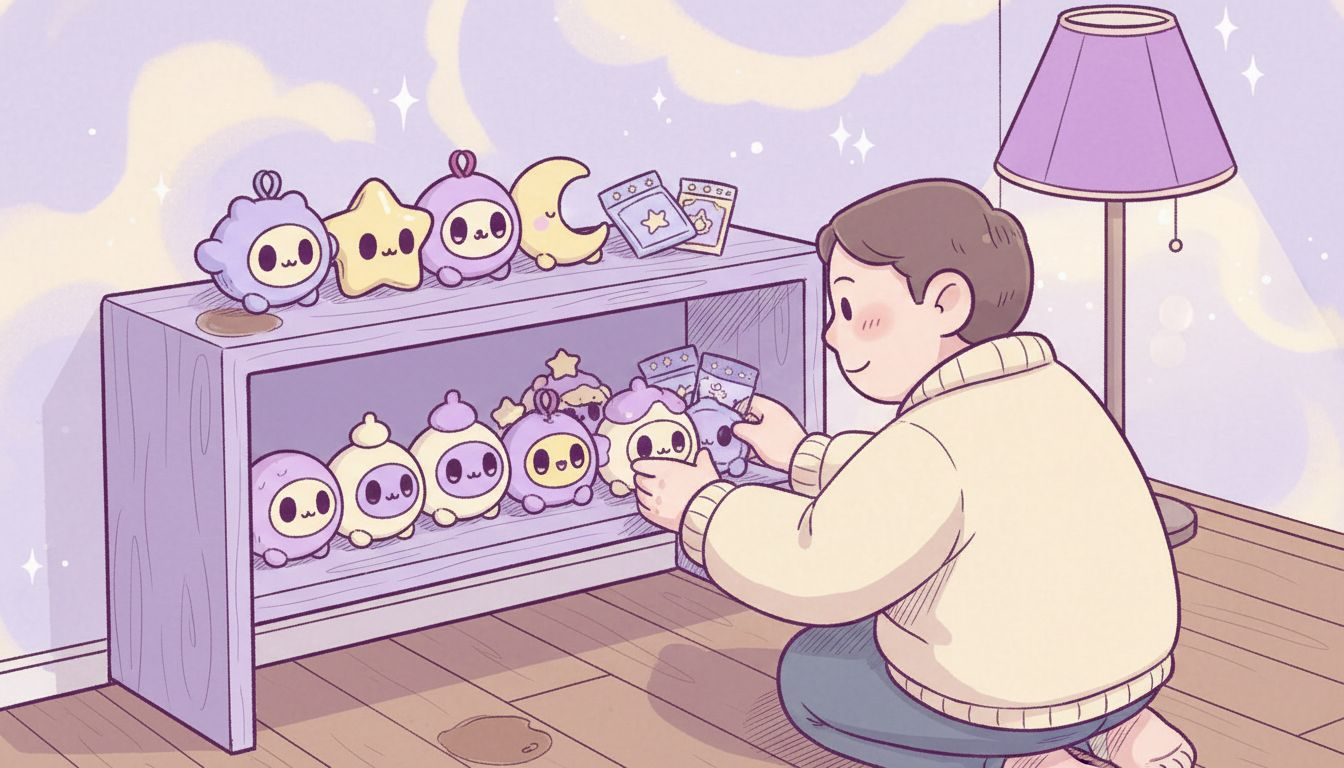
Psychological and emotional benefits for ADHD collectors
Collecting blind boxes does more than fill shelves. It creates a structured hobby that actively supports focus and emotional wellbeing for adults managing ADHD.
The dopamine boost from opening surprise collectibles helps regulate attention in meaningful ways. Your brain craves novelty and reward, and blind boxes deliver both in measured doses. Unlike endless scrolling or impulsive purchases, each box provides a discrete reward experience that satisfies without overwhelming.
Collecting hobbies regulate dopamine, improving focus and emotional regulation in ADHD individuals through predictable yet engaging activities. This matters because ADHD brains often struggle with dopamine regulation, leading to difficulty maintaining interest in tasks or managing emotional responses.
Tactile engagement offers another layer of benefit. Holding, examining, and arranging physical collectibles provides grounding sensory input that helps calm racing thoughts. The weight of a plush toy or the texture of a painted figure creates a tangible anchor point when your mind feels scattered.
Creativity flourishes through customisation and display. Arranging your collection, creating themed groupings, or even modifying items transforms passive ownership into active creative expression. This process engages executive function skills in a low pressure, enjoyable context.
Blind box collecting also establishes manageable routines. Deciding when to purchase a new box, researching upcoming releases, or organising your collection creates structure without rigid demands. These activities fit naturally into your schedule and provide something positive to anticipate.
Pro Tip: Combine your collecting moments with mindful breathing or brief journaling. Before opening a new blind box, take three deep breaths and note your current mood. After revealing the item, write one sentence about how it makes you feel. This practice enhances the calming benefit whilst building emotional awareness.
The key benefits for ADHD support include:
- Attention anchoring: Physical items provide focal points that help redirect wandering thoughts
- Emotional soothing: Tactile interaction with soft plush or smooth figures reduces anxiety and stress
- Routine building: Regular collecting activities create positive habits without pressure
- Identity expression: Collections reflect personal interests and creative choices, supporting self esteem
These psychological advantages make blind boxes particularly valuable for young adults seeking creative outlets that genuinely support their mental health needs.
Common misconceptions about blind box collecting
Despite growing popularity, blind boxes face persistent misunderstandings that deserve clarification. Addressing these myths helps you approach collecting with confidence and realistic expectations.
-
Blind boxes are gambling: This common claim misunderstands both activities. Gambling involves risking money for potential monetary gain with uncertain odds. Blind boxes guarantee you receive a collectible item, even if not your preferred variant. You’re purchasing a physical product, not betting on an outcome. Responsible blind box collecting has low addiction risk distinct from gambling behaviours, according to psychological research.
-
Collectors only want resale value: Whilst some enthusiasts trade duplicates, most collectors pursue blind boxes for personal joy and emotional connection. The thrill comes from completing sets, discovering rare items, or simply enjoying beautifully designed objects. Resale markets exist, but they’re secondary to the primary motivation of collecting for pleasure and creative expression.
-
Blind boxes exploit vulnerable buyers: Responsible collecting involves conscious choices and budget management, similar to any hobby. Manufacturers provide information about series contents and rarity distributions. When you approach collecting mindfully, setting limits and researching purchases, exploitation isn’t a concern. The activity becomes a controlled, enjoyable hobby.
-
Only children enjoy blind boxes: The 19 to 32 demographic represents a significant collector base precisely because blind boxes offer sophisticated design, nostalgic appeal, and creative engagement that resonates with adult sensibilities. High quality collectibles feature intricate details, artistic collaboration, and cultural references that appeal to mature collectors.
-
Blind box collecting indicates poor impulse control: Actually, maintaining a collection requires planning, budgeting, and organisational skills. Many collectors develop spreadsheets tracking their series, set budgets, and research releases carefully. These practices exercise executive function in positive ways.
Understanding these realities helps position blind box collecting as what it truly is: a legitimate hobby offering creative satisfaction, emotional benefits, and community connection. For ADHD adults especially, the structured yet flexible nature of collecting provides mood lifting collectibles that support wellbeing without the risks critics sometimes imagine.
Comparing blind boxes to traditional collectibles
Blind boxes and traditional collectibles serve different emotional needs and collecting strategies. Understanding these distinctions helps you choose what best fits your interests and ADHD support goals.
| Aspect | Blind Boxes | Traditional Collectibles |
|---|---|---|
| Purchase experience | Surprise element creates anticipation and dopamine spike | Known item provides certainty and targeted acquisition |
| Emotional engagement | High excitement from unpredictability and discovery | Steady satisfaction from completing planned collections |
| Value perception | Varies based on rarity and personal attachment | More stable, often linked to condition and market demand |
| Collection building | Random acquisition encourages flexibility and acceptance | Deliberate purchasing allows precise curation |
| ADHD suitability | Novelty seeking satisfied; impulsivity manageable with budgets | Requires sustained focus for hunting specific items |
The emotional journey differs significantly. Opening a blind box delivers an immediate reward regardless of the specific item revealed. Even duplicates or common variants provide the satisfaction of participation and the tactile pleasure of a new object. Traditional collecting, by contrast, centres on the hunt for specific pieces, which can feel frustrating when desired items prove elusive.
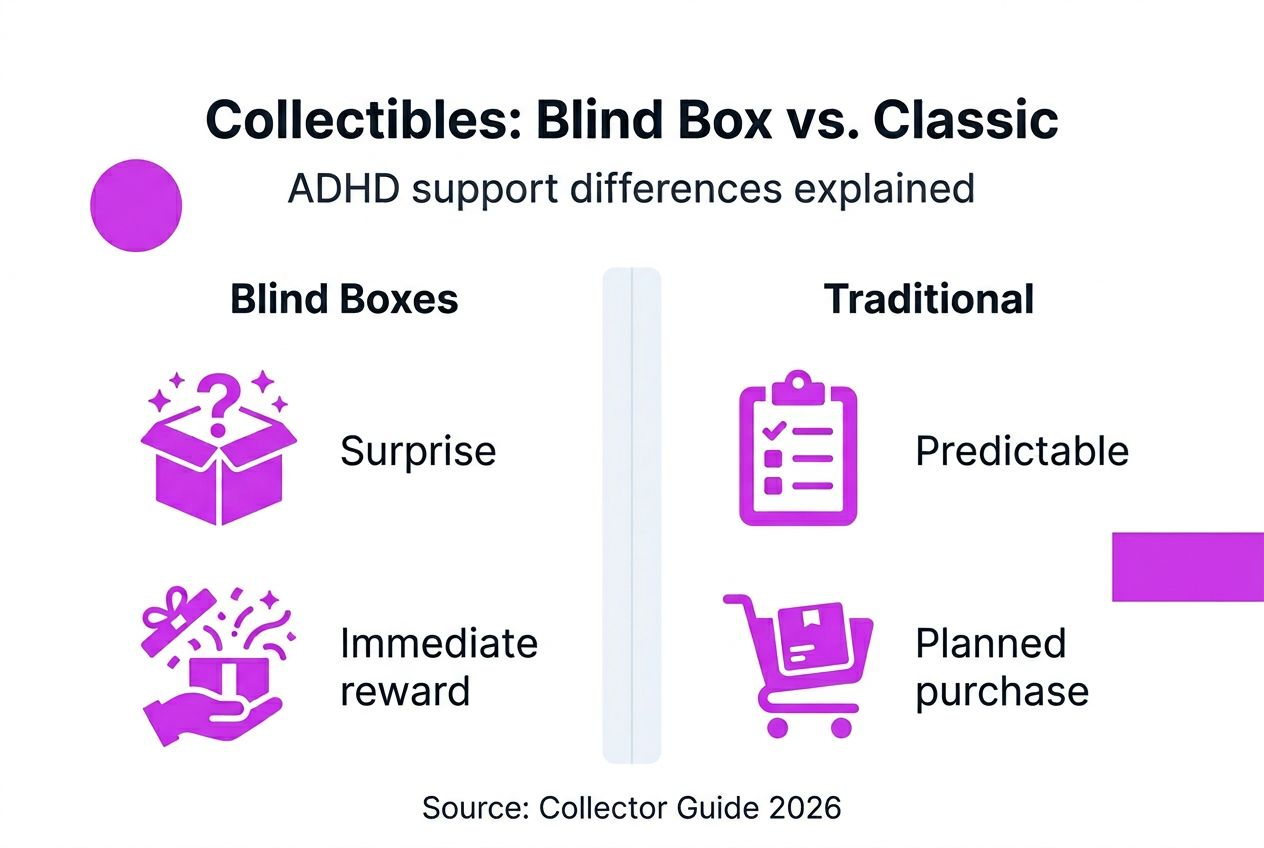
Limited edition blind boxes increase collector engagement by 40% compared to regular editions, demonstrating how scarcity and surprise combine to heighten satisfaction. Traditional collectibles also utilise limited releases, but the acquisition process lacks the element of chance that makes blind boxes distinctive.
Young adults aged 19 to 32 often prefer blind boxes for several reasons:
- Lower individual cost: Most blind boxes range from £5 to £15, making collecting accessible without major financial commitment
- Immediate gratification: No waiting for auctions or hunting through shops for rare pieces
- Social sharing: The surprise element creates opportunities to share unboxing experiences with friends or online communities
- Reduced pressure: Not knowing exactly what you’ll get eliminates the disappointment of missing a specific item
For ADHD collectors, blind boxes offer the novelty stimulation your brain craves whilst traditional collectibles provide structure and long term goals. Many successful collectors blend both approaches, maintaining curated traditional collections whilst enjoying periodic blind box surprises.
When choosing between approaches, consider your primary goals. If you seek regular dopamine boosts and tactile engagement without strict planning, plush blind box collectibles excel. If you prefer researching, hunting, and carefully building comprehensive sets, traditional collecting might suit you better. Many find the combination most satisfying.
Practical guide to buying and managing blind box collections
Building a blind box collection that enhances your wellbeing rather than creating stress requires intentional strategies and mindful practices.
Set clear budget boundaries. Decide monthly spending limits before browsing new releases. A realistic budget might be £20 to £50 monthly, depending on your financial situation. This prevents impulsive overspending whilst ensuring regular collecting opportunities. Consider using a separate account or envelope specifically for collectibles to maintain visibility of your spending.
Evaluate rarity and edition types strategically. Manufacturers typically disclose rarity ratios for chase figures or secret editions. Understanding these odds helps set realistic expectations. If a series has a 1 in 12 chance for a rare variant, you can decide whether purchasing multiple boxes aligns with your budget and emotional investment.
Research before purchasing. Spend time exploring upcoming releases, reading reviews, and understanding series themes. This research phase itself provides enjoyable anticipation whilst ensuring you invest in collections that genuinely resonate with your interests. Trusted sellers with clear return policies and authentic products protect your investment.
Integrate collecting with daily routines. Designate specific times for browsing new releases or organising your collection. Perhaps Saturday mornings become your collecting time, creating a calm ritual that reduces weekday overwhelm. This structure helps ADHD minds by establishing predictable, enjoyable activities.
Pro Tip: Maintain a collection journal tracking purchases, the emotions you felt during unboxing, and creative ideas for displaying items. This practice builds mindfulness around your hobby, helps identify spending patterns, and creates a record of positive experiences you can revisit during difficult days.
Additional practical strategies include:
- Trade duplicates thoughtfully: Join collector communities where swapping duplicates for needed items builds social connections whilst completing sets
- Display with intention: Create themed arrangements that reflect your personality and provide visual calm in your space
- Photograph your collection: Digital records help appreciate what you own, potentially reducing the urge to purchase more
- Celebrate completions: When you finish a series, acknowledge the accomplishment before starting another, reinforcing positive feelings
For those seeking collectibles that specifically support ADHD needs, explore types of calming blind box toys and comfort collectibles for ADHD that combine surprise elements with tactile soothing properties.
Managing your collection mindfully transforms it from potential clutter into a curated expression of your interests and a genuine tool for emotional regulation.
Integrating blind boxes with tools for ADHD support
Physical collectibles gain additional value when combined with digital ADHD management tools, creating a holistic approach to focus and emotional regulation.
Interactive collectibles that engage multiple senses provide layered benefits. A plush blind box you can touch and hold offers tactile comfort, whilst connecting it to digital features through NFC technology extends functionality. MOMORO exemplifies this integration, transforming collectible plush into 5 in 1 companions that support daily routines.
Combining collection moments with app based features enhances the experience:
- Reminder systems: Use digital tools to schedule collecting time, preventing impulsive purchases whilst ensuring you don’t forget planned acquisitions
- Calming exercises: Pair the excitement of unboxing with breathing techniques or brief meditation guided by ADHD focused apps
- Mood tracking: Log how collecting activities affect your emotional state, identifying patterns that inform future decisions
- Creative prompts: Digital platforms can suggest display ideas or customisation projects for your physical collection
User preferences increasingly favour collectibles that bridge physical and digital realms. The tangible satisfaction of holding a soft plush combines with practical features like phone holders or detachable wallets, making collectibles functional rather than merely decorative.
The synergy between physical surprise and digital focus tools creates powerful support mechanisms. Opening a blind box provides immediate dopamine reward, whilst digital reminders and calming content help sustain focus throughout your day. This combination addresses both the novelty seeking and routine building that ADHD minds require.
For 2026, consider ADHD toy picks and interactive toys for ADHD that specifically integrate physical comfort with digital functionality. These tools recognise that effective ADHD support rarely comes from single solutions but rather from thoughtfully combined approaches.
Personalised integration matters most. Experiment with different combinations of physical collecting and digital tools to discover what genuinely helps you maintain calm and focus. Your unique brain deserves customised support that reflects your specific needs and preferences.
Summary and next steps for enthusiast collectors
Blind box collecting offers genuine benefits for ADHD adults seeking creative outlets and emotional support. The combination of surprise, rarity, and tactile engagement creates opportunities for dopamine regulation, focus anchoring, and calm routines that fit naturally into busy lives.
You’ve learned that concerns about addiction or exploitation largely stem from misunderstandings. Responsible collecting involves conscious budgeting, research, and integration with daily routines. These practices transform blind boxes from impulsive purchases into mindful hobby activities that support your wellbeing.
The emotional and creative benefits extend beyond the moment of unboxing. Curating displays, tracking collections, and participating in collector communities provide ongoing engagement that exercises planning skills whilst satisfying novelty seeking tendencies inherent to ADHD minds.
Combining physical collectibles with digital tools like MOMORO creates comprehensive support systems. Interactive features extend the value of each item beyond aesthetics, making your collection genuinely functional in managing daily challenges.
To start or enhance your collecting journey, begin with small steps. Choose one limited edition series that genuinely appeals to your interests. Set a modest budget of £20 for your first month. Create a simple tracking system using a notebook or spreadsheet. Most importantly, approach collecting with curiosity rather than pressure.
Remember that your collection should serve you, not create additional stress. Focus on items that bring genuine joy, support your creative expression, and provide tactile comfort during difficult moments. Explore offerings at MOMORO store to discover collectibles designed specifically for ADHD support and emotional wellbeing.
Blind box collecting at its best becomes more than accumulating objects. It transforms into a practice of mindful engagement, creative expression, and gentle self care perfectly suited to the unique needs of ADHD minds seeking calm amidst chaos.
Explore calming collectibles at MOMORO
Ready to experience blind boxes designed specifically for ADHD support and creative expression? MOMORO curates collectibles that combine surprise elements with genuine calming functionality, creating companions rather than mere decorations.
Our selections blend tactile comfort with practical features, transforming collectibles into everyday tools that reduce overwhelm. Each item offers the excitement of unboxing whilst providing lasting value through interactive features and thoughtful design.
Explore the MOMORO store to discover collections featuring plush companions with NFC enabled digital content, functional accessories, and monthly calming gifts. Our blog provides ongoing insights about blind box plush benefits and types of calming blind box toys to guide your collecting journey.
Incorporate these mindfully designed collectibles into your wellness routine. Experience how surprise, comfort, and functionality combine to support your ADHD mind in managing daily challenges whilst expressing your unique creative identity.
FAQ
What makes blind boxes particularly helpful for adults with ADHD?
Blind boxes trigger dopamine release through surprise and reward anticipation, which helps regulate attention and motivation in ADHD brains. The tactile nature of physical collectibles provides grounding sensory input that calms racing thoughts and reduces anxiety. This combination creates manageable, rewarding activities that support focus without requiring sustained planning.
Are blind boxes addictive or similar to gambling?
Responsible blind box collecting has very low addiction risk distinct from gambling behaviours, according to neurological research. Unlike gambling, blind boxes guarantee you receive a physical product rather than betting on uncertain monetary outcomes. Collecting involves conscious purchasing decisions with clear budgets, fundamentally different from compulsive gambling patterns.
How can I start a blind box collection without overspending?
Set strict monthly budget limits before browsing new releases, typically £20 to £50 depending on your finances. Research series thoroughly to understand rarity ratios and ensure purchases align with your genuine interests rather than impulse. Integrate collecting into regular routines like weekend self care time, preventing spontaneous purchases whilst maintaining enjoyable anticipation. Explore types of calming blind box toys to identify collections offering both emotional value and ADHD support.
What types of blind boxes best support creativity?
Customisable plush and artistic blind boxes foster creativity through personalisation opportunities and imaginative display possibilities. Look for collections encouraging modification, themed arrangements, or storytelling with your items. Plush blind box collectibles particularly support creative expression through tactile engagement and emotional connection that inspires unique curation and presentation approaches.