

Finding genuine calm as a young adult with ADHD in the UK can feel like an endless hunt—especially when everyday stresses pile up faster than you can keep track. Comfort collectibles stand out as more than just quirky shelf decor. They work as emotional anchors, offering a blend of tactile comfort and portability that actually fits your life. This guide highlights how these special items support focus, help manage overwhelm, and bring real value beyond standard collectibles.
Table of Contents
- Defining Comfort Collectible And Core Purpose
- Types Of Comfort Collectibles For ADHD Minds
- Key Features: Emotional Support And Functionality
- Real-World Uses And ADHD Management Benefits
- Risks, Costs And Avoiding Common Pitfalls
Key Takeaways
| Point | Details |
|---|---|
| Emotional Support | Comfort collectibles serve as emotional anchors for adults with ADHD, providing a sense of safety and self-compassion during moments of overwhelm. |
| Functionality | These items are not just decorative; they offer practical support in daily life, functioning as fidget tools and stress relief aids. |
| Personalised Selection | The effectiveness of a comfort collectible depends on personal preference; choose one that resonates with your needs for tactile comfort and emotional grounding. |
| Integration with Management Strategies | While helpful, comfort collectibles should complement professional ADHD treatment rather than replace it, forming part of a holistic approach. |
Defining comfort collectible and core purpose
A comfort collectible is much more than a toy sitting on your shelf. It’s an emotional anchor that grounds you when life gets chaotic—especially when you’re managing ADHD.
Think of it as a physical reminder that you’re safe, capable, and not alone. These items can be soft toys, keychains, plushes, or anything tactile that brings you genuine calm.
Unlike traditional collectibles you keep pristine and untouched, comfort collectibles are meant to be used, held, and loved. They’re functional emotional support.
What makes a comfort collectible different
Comfort collectibles combine three key elements:
- Emotional connection — Links to positive memories or feelings
- Tactile comfort — Soft textures, weight, or fidget qualities that soothe
- Accessibility — Easy to carry, hold, or interact with daily
The whole point is that you don’t keep it locked away. You carry it in your bag, keep it on your desk, or grab it when your brain feels overwhelming.
Comfort collectibles work because they bridge the gap between needing support and actually using it—they’re always within reach.
Why adults with ADHD specifically benefit
Adults living with ADHD often struggle with emotional regulation and focus. A comfort collectible serves as a grounding tool during moments of overwhelm, distraction, or anxiety.
When your thoughts are scattering in fifteen directions, holding something soft and familiar can anchor you back to the present moment. It’s not about the object itself—it’s about what it represents: self-compassion and permission to take care of yourself.
You can also use comfort collectibles as fidget objects, helping you channel restless energy productively. This is why many ADHD-friendly collectibles combine softness with interactive features.
The ADHD-specific purpose
For adults with ADHD, comfort collectibles aren’t childish or unnecessary. They’re part of a neurodiversity approach that treats ADHD not as a defect but as a different cognitive style requiring different support tools.
They help with:
- Grounding during stress or sensory overload
- Reducing fidgeting anxiety through tactile interaction
- Building self-compassion and acceptance
- Creating portable emotional regulation strategies
- Keeping focus anchors accessible throughout your day
This is why collectible toys support focus for adults managing ADHD—they’re not decoration. They’re functional wellness tools.
Pro tip: Choose a comfort collectible with tactile appeal—soft textures, weight, or fidget qualities you genuinely enjoy. The best one is whatever you’ll actually pick up when you need it most.
Types of comfort collectibles for ADHD minds
Not all comfort collectibles work the same way. What soothes one person might do nothing for another, which is why it helps to know what options exist and what they actually do for your brain.
The best comfort collectible is one you’ll genuinely reach for when you’re stressed, scattered, or overwhelmed. That means understanding the different types and finding what resonates with you.
Soft and tactile collectibles
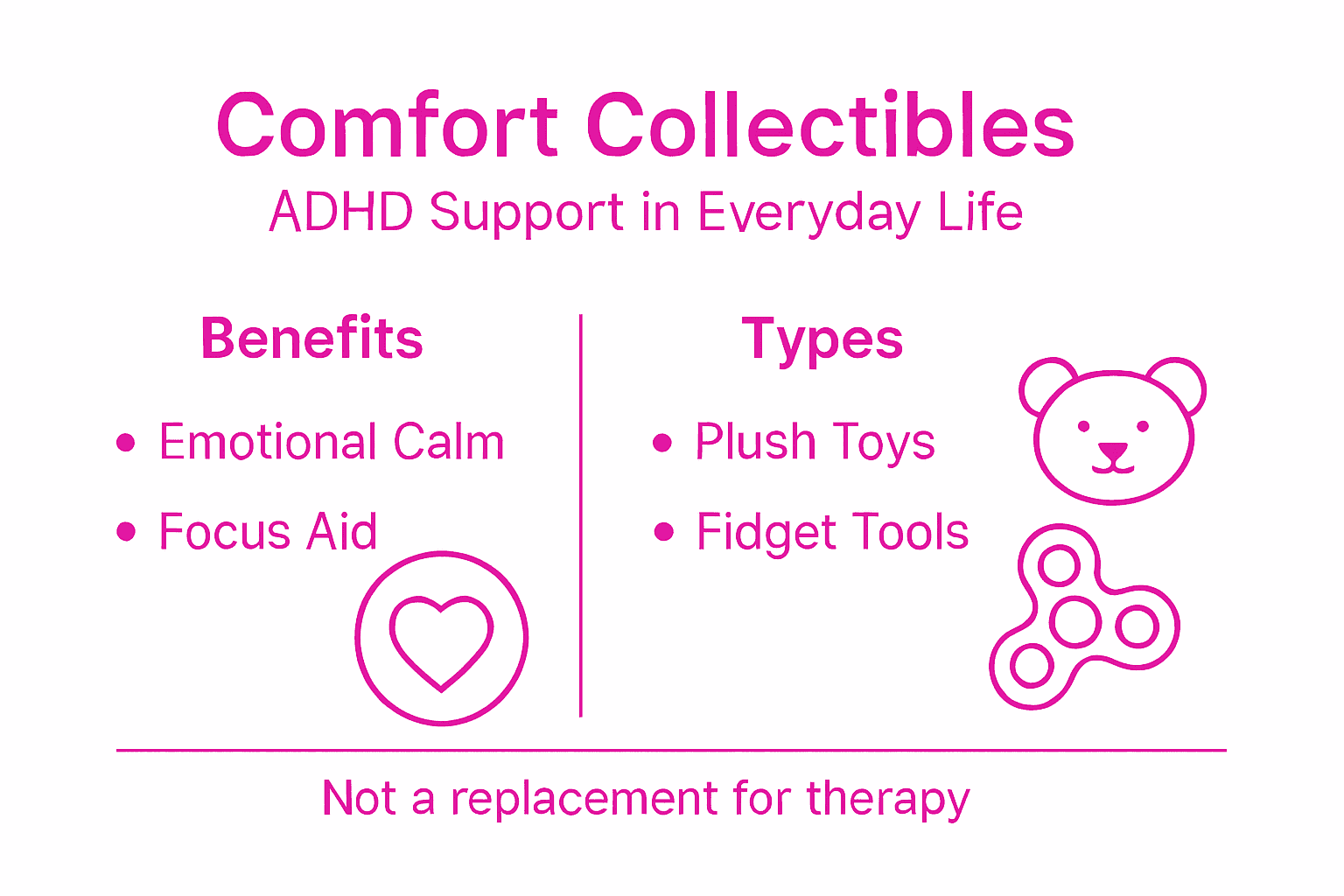
Plushes, blankets, and textured toys are the classics for good reason. They’re designed to be held, squeezed, and cuddled when anxiety spikes.
These work brilliantly for ADHD because they give your hands something to do while your mind settles. You can fidget with them without looking strange at your desk or on public transport.

Plush collectibles specifically offer softness combined with personality, making them both comforting and collectible. Many come with mood-lifting designs that provide emotional uplift alongside tactile calm.
Why they work:
- Soft textures trigger calming responses in your nervous system
- Weight and substance give grounding sensation
- Portable enough to keep with you anywhere
- No judgment—they’re socially acceptable stress tools
Crystal and mineral collectibles
Crystals like Amazonite, Lapis Lazuli, and Citrine are becoming popular among adults managing ADHD. While the science on their metaphysical properties remains debated, the tactile and symbolic benefits can genuinely support emotional balance.
You hold them, you focus on them, you associate them with intention. For some ADHD minds, that ritual alone creates a grounding moment.
They’re also beautifully collectible—each crystal has different colours and qualities, so building a small collection feels meaningful rather than excessive.
Sleep and rest-focused collectibles
If ADHD keeps you wired at night, certain collectibles support better sleep routines. Weighted items and sensory objects designed for bedtime can ease the anxiety and insomnia that often come with ADHD.
These aren’t always traditional toys—they’re functional wellness items that happen to be collectible and beautiful.
Here’s a comparison of common comfort collectible types and their unique strengths for ADHD:
| Type | Primary Benefit | Tactile Qualities | Best For |
|---|---|---|---|
| Plush or Soft Toy | Emotional reassurance | Ultra-soft and squishy | Calming anxiety |
| Crystal or Mineral | Symbolic grounding focus | Cool and smooth to hold | Mindful rituals |
| Weighted Blanket/Object | Physical grounding for rest | Heavy and enveloping | Sleep or deep relaxation |
| Fidget Toy | Productive energy channel | Clicky, pop, squeeze | Maintaining concentration |
The right comfort collectible meets you where you actually are, not where you think you “should” be.
Interactive and fidget collectibles
Some collectibles combine softness with interactive features—pop-its, squeeze elements, or fidget qualities built in.
These appeal to the fidgeting need that many adults with ADHD experience, giving restless energy a productive outlet. You’re not just holding something; you’re engaging with it in a way that channels nervous energy.
They work because:
- Channel fidgeting into something tactile and satisfying
- Provide sensory stimulation without distraction
- Keep hands busy whilst you focus mentally
- Feel playful rather than clinical
How to choose what’s right for you
The type that works depends on your specific ADHD profile. Do you need grounding weight, or something soft and squeezable? Do you prefer collectibles that look beautiful on display, or ones you keep hidden in your pocket?
There’s no “correct” answer—just what genuinely helps you regulate when things get hard.
Pro tip: Start by noticing what you naturally reach for when stressed—a cushion, a textured object, something cold or warm. Your instincts already know what your ADHD mind needs.
Key features: Emotional support and functionality
The best comfort collectibles do two things at once: they make you feel better emotionally and they actually work in your daily life. This dual purpose is what separates a collectible that sits unused from one you genuinely reach for.
When you’re choosing a comfort collectible for ADHD, you’re not just buying an object—you’re investing in a tool that works on both emotional and practical levels.
Emotional support at its core
Comfort collectibles work emotionally because they trigger sensory stimulation through soft textures and familiar appearances, creating immediate calm responses in your nervous system.
They function as emotional anchors that reduce distress and provide a sense of security when your ADHD brain feels chaotic. You hold something familiar and your nervous system recognises it as safe.
This isn’t placebo. Soft textures actually activate parasympathetic responses—the part of your nervous system responsible for calming down.
Memory and association matter
The emotional power of comfort collectibles comes from what they represent, not just what they feel like. Each time you reach for yours, you’re reinforcing positive associations with calm, safety, and self-care.
Over time, your brain learns that this object equals regulation. Just seeing it can trigger a calming response before you’ve even picked it up.
That’s why personalised or meaningful collectibles work better than generic ones. Your specific item carries emotional weight.
Practical daily functionality
Now for the functional part. A comfort collectible for ADHD needs to fit into your actual life, not sit on a shelf gathering dust.
The best ones offer multiple uses:
- Fidget tool — Channel restless energy whilst you focus
- Portable — Small enough to carry in your bag or pocket
- Accessible — Easy to grab quickly when overwhelm hits
- Multi-purpose — Works as keychain, desk buddy, or bedside companion
- Unobtrusive — Doesn’t draw unwanted attention in professional settings
A comfort collectible only works if you actually use it. Functionality means it fits seamlessly into how you live, not how you “should” live.
The MOMORO difference
When a comfort collectible combines emotional support with genuine everyday functionality, it becomes something you can’t live without. It’s not a therapy tool that feels awkward to use—it’s a companion that belongs in your daily routine.
This means soft textures for calming paired with practical features like keychain attachment, phone holding, or wallet space. Emotional regulation meets real-world utility.
How to evaluate if something has both
Before investing in a comfort collectible, ask yourself these questions:
- Does it feel genuinely comforting to hold or touch?
- Will I actually carry or use it regularly?
- Does it solve a real problem in my life (organisation, fidgeting, focus)?
- Will it still support me in a month when the newness wears off?
If you’re saying yes to all of these, you’ve found something with real emotional support and practical functionality working together.
Pro tip: Test a comfort collectible for at least a week before deciding if it truly works for you. The emotional and functional benefits build over time as your brain develops associations with it.
Use this table to evaluate a comfort collectible before buying:
| Question to Ask | Why It Matters | Example Interpretation |
|---|---|---|
| Does it fit into daily routines easily? | Ensures you’ll use it regularly | Keychain is ideal for travel |
| Does it bring immediate emotional calm? | Triggers positive nervous response | Softness feels soothing |
| Will it remain useful when the novelty fades? | Supports long-term effectiveness | Still reach for it after weeks |
| Does it solve a real support need (focus, stress)? | Matches your ADHD support goals | Reduces stress during work |
Real-world uses and ADHD management benefits
Comfort collectibles aren’t just nice to have—they’re practical tools that fit into the messy reality of living with ADHD. When used consistently, they become part of your actual management strategy.
The best part? They work alongside other strategies without requiring extra effort or willpower. They just sit there being helpful.
Sleep and rest support
One of the biggest ADHD struggles is sleep. Your brain won’t switch off, your body feels wired, and you’re staring at the ceiling at 2 a.m. for the third night running.
Comfort collectibles help here by improving sleep quality through sensory-friendly environments, creating predictable wind-down routines that signal to your brain it’s time to rest.
Keeping a soft, familiar item on your pillow or nightstand creates a calming anchor as you try to sleep. It’s not medication, but it works.
Managing overwhelm in the moment
When you’re mid-spiral—scattered thoughts, rising anxiety, feeling disconnected—a comfort collectible gives you something immediate to do. Hold it. Squeeze it. Focus on how it feels.
This single action interrupts the panic loop and gives your nervous system something grounding to attach to instead of spiralling thoughts.
It works because you don’t have to remember a breathing technique or talk yourself down. The object does the heavy lifting.
Fidgeting with purpose
Many adults with ADHD need movement or tactile stimulation to focus. Without it, you’re bouncing your leg, tapping your fingers, or doing anything to channel restless energy.
A fidget-friendly comfort collectible lets you channel that energy productively. Your hands stay busy, your mind settles, and you can actually focus on what matters.
This is especially useful in work meetings, lectures, or situations where constant movement looks inappropriate.
Building predictable routines
ADHD brains struggle with consistency. But comfort collectibles can anchor routines by creating familiar touchpoints throughout your day.
Routines become easier when there’s a physical, sensory reminder that supports them:
- Morning focus time with your collectible on your desk
- Lunch break fidgeting to reset attention
- Evening wind-down ritual with your comfort item nearby
- Work transition moment where you hold something familiar before starting a new task
The routine doesn’t have to be complicated. Anything repeated consistently becomes neurologically soothing for an ADHD mind.
Reducing isolation and building connection
Living with unmanaged ADHD can feel isolating. You’re struggling whilst others seem fine. A comfort collectible becomes a companion that acknowledges your struggle without judgement.
It’s something you understand, something that works for you, something that doesn’t demand you be different. That matters more than it sounds.
Integration into your day
The real magic happens when comfort collectibles stop being “a thing you’re trying” and become just part of how you operate. You carry it like your keys. You reach for it like your phone.
It’s not extra work. It’s not another wellness task. It’s just there, helping.
Pro tip: Place your comfort collectible in multiple locations—your desk, your bag, your bedside table. The more accessible it is, the more likely you’ll use it when you need it most.
Risks, costs and avoiding common pitfalls
Comfort collectibles are genuinely helpful, but they’re not a substitute for actual ADHD management. This is the critical bit that gets missed sometimes—and it matters.
They work best as part of a broader strategy that includes professional support, not instead of it. Knowing the risks and costs upfront helps you use them wisely.
The substitution trap
Here’s the sneaky risk: a comfort collectible feels so good that you start thinking it’s doing the job of therapy, medication, or professional assessment. It’s not.
Potential risks of over-reliance on comfort collectibles include masking underlying ADHD symptoms without addressing core functional impairments. You feel calmer, but your actual ADHD challenges—time management, executive function, impulse control—aren’t being treated.
That calm feeling can delay you getting the help you actually need.
Financial costs add up
Comfort collectibles are typically affordable, but the cost isn’t the main issue. The real cost comes from trial and error.
You’ll likely buy several before finding one that genuinely works for you. That’s normal, but it’s worth acknowledging. Budget for experimentation rather than expecting one purchase to solve everything.
Compare this to other ADHD supports, and collectibles are still relatively low-cost. But don’t fall into endless purchasing thinking the next one will be “the one.”
Common pitfalls to avoid
These are the mistakes people make most often:
- Using collectibles as your only coping mechanism instead of integrating them with professional support
- Expecting them to work without actually using them consistently
- Buying expensive or rare items instead of practical, accessible ones
- Treating them as therapy substitutes rather than complementary tools
- Neglecting medication, assessment, or counselling because the collectible helps temporarily
A comfort collectible shines brightest when it’s part of a comprehensive ADHD strategy—not the strategy itself.
Integration with professional support
The safest approach combines comfort collectibles with evidence-based ADHD treatment. This means continuing medication if prescribed, attending therapy, and working with healthcare providers on your actual management plan.
Think of the collectible as a daily support tool that makes other treatments easier to stick with. It reduces overwhelm so you have energy for professional work.
This combination approach is where the real benefit lives.
Reality check on effectiveness
Comfort collectibles work brilliantly for emotional regulation and fidgeting. They don’t work for structural ADHD challenges like deadline management, working memory gaps, or executive dysfunction.
You still need systems, support, and sometimes medication for those. The collectible helps you feel calmer whilst you’re building those systems.
What to watch for
If you notice any of these, reassess your approach:
- You’re buying collectibles constantly, seeking the “perfect” one
- You’re feeling worse despite using your collectible regularly
- You’ve stopped pursuing professional ADHD support because the collectible helps
- Your actual ADHD symptoms are getting worse, not better
- You’re using collectibles to avoid addressing real functional problems
If something feels off, that’s your signal to bring in professional input.
Pro tip: If you’re not currently working with an ADHD specialist, start there before investing heavily in comfort collectibles. Professional support first, collectibles as complementary tools second.
Discover Your Perfect Comfort Collectible Companion for ADHD Support
The article highlights how adults with ADHD need comfort collectibles that offer both emotional grounding and practical daily use to manage overwhelm, focus challenges and anxiety. If you relate to seeking a tactile, accessible and multitasking support tool designed specifically for ADHD minds, MOMORO offers exactly that. Our 5-in-1 interactive plush companion combines soft, soothing textures with essential everyday functionalities to help reduce mental clutter and build calm routines without pressure.
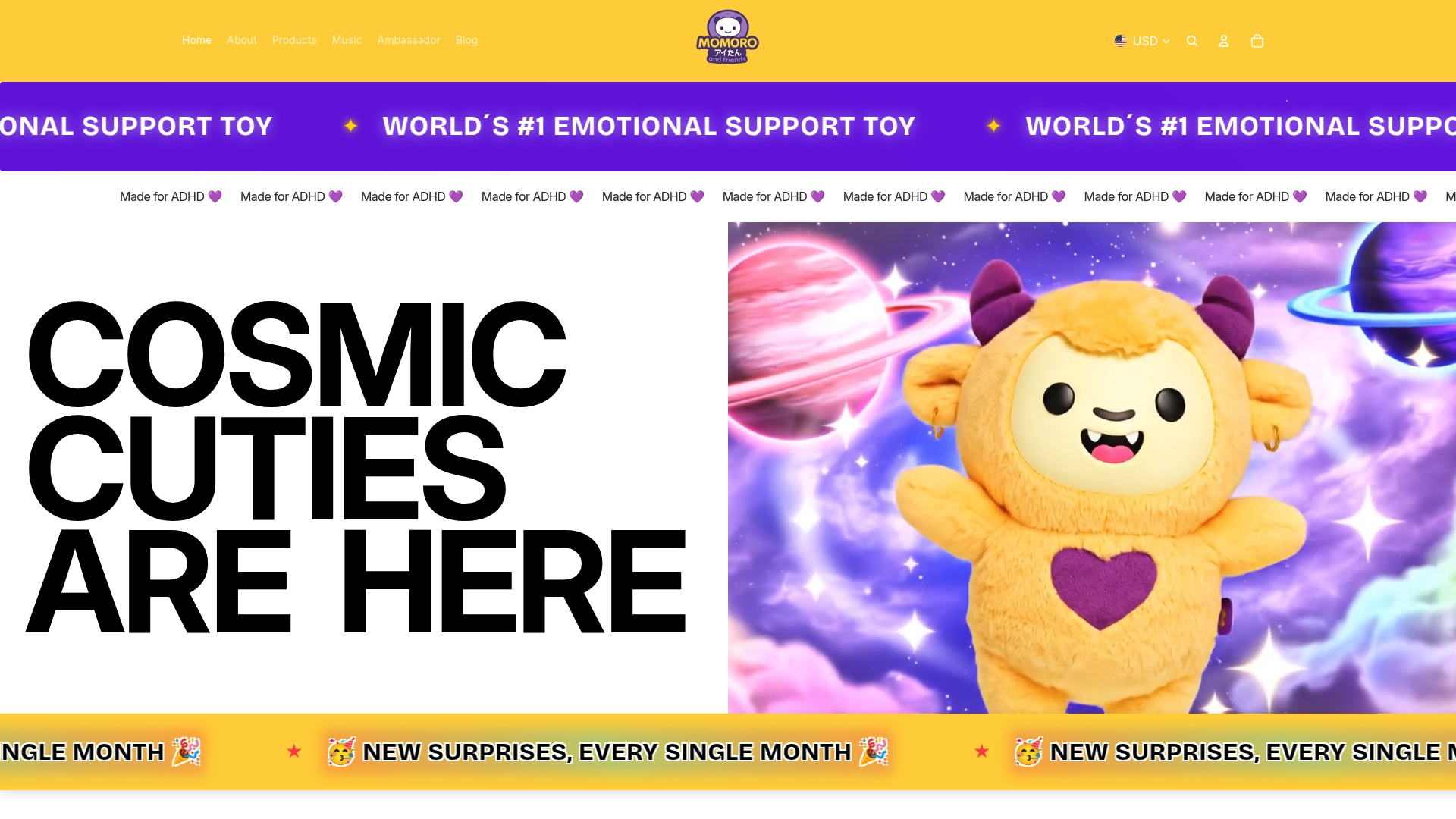
Explore our Shop Japanese-Inspired Plush Toys for ADHD & Anxiety – MOMORO & Friends to find a comfort collectible that truly understands your unique needs. With features like monthly calming digital gifts, keychain convenience, phone and headphone holders plus a detachable wallet, MOMORO is more than a collectible—it’s a consistent support system ready to accompany you wherever life takes you. Start embracing a calmer, more focused you today at https://www.momoro.store/.
Frequently Asked Questions
What are comfort collectibles?
Comfort collectibles are emotional anchors that provide grounding and support, especially for adults managing ADHD. They can be soft toys, fidget items, or other tactile objects that evoke positive feelings and help calm anxiety.
How can comfort collectibles benefit adults with ADHD?
Comfort collectibles can assist in emotional regulation and focus by acting as grounding tools during overwhelming moments. They provide a tactile sensation that helps reduce stress, anxiety, and fidgeting, enabling better concentration.
What types of comfort collectibles are effective for managing ADHD?
Effective comfort collectibles include soft and tactile items like plush toys, crystals with grounding qualities, weighted objects for better sleep, and interactive fidget toys that help channel restless energy.
How do I choose the right comfort collectible for my needs?
Select a comfort collectible that resonates with you based on your preferences. Consider the type of tactile qualities you enjoy, its portability, and whether it fits seamlessly into your daily routine. Notice what you naturally reach for when stressed for better insight.
Recommended
- Mood-Lifting Collectibles: Uplifting Focus for ADHD Minds – MOMORO & Friends
- Why Collectable Toys for Adults Support Focus – MOMORO & Friends
- Plush Companions and ADHD – Calmer Focus for Kids – MOMORO & Friends
- Explore How Collectible Plushies Enhance ADHD Wellbeing – MOMORO & Friends
- How Can Contemporary Artist Prints Foster Creativity in a Child’s Bedr – Art-O-Rama Shop
- Compact Chair Benefit Explained: Comfort Anywhere – Sitpack