

Over 60 percent of british parents with children diagnosed with ADHD report daily struggles managing toys and emotional overload. For collectors of limited edition plushies, clutter can quickly become overwhelming rather than comforting, especially in busy UK homes. Discover practical ways to organize your cherished plush collection so it not only looks beautiful but also supports emotional wellbeing, reduces stress, and empowers your child to find joy and calm in every cuddle.
Table of Contents
- Step 1: Assess Your Plush Collection And Set Goals
- Step 2: Sort Plush Toys By Theme, Size, Or Series
- Step 3: Select Storage Solutions For Calm And Access
- Step 4: Display And Label Plush For Easy Retrieval
- Step 5: Verify Organisation Supports Stress Relief
Quick Summary
| Key Insight | Explanation |
|---|---|
| 1. Create an inventory | Gather and categorise your plush collection for clarity and insight into what you own. |
| 2. Set clear goals | Establish specific and achievable objectives using the SMART framework for your organization. |
| 3. Sort by meaningful categories | Organise plushies by theme, size, or emotional value to create a coherent display that resonates. |
| 4. Choose smart storage solutions | Select appropriate storage options that safeguard and enhance the visibility of your collection. |
| 5. Implement an effective labelling system | Use consistent labels for easy identification and retrieval, aiding in the overall organisation. |
Step 1: Assess your plush collection and set goals
Tackling your plush collection starts with a clear inventory and strategic planning. Effective objective setting requires understanding exactly what you have and defining what you want to achieve with your adorable companions.
Begin by gathering all your plush friends in one space. Spread them out and create categories based on size, series, condition, or emotional significance. Are some treasured limited editions from Popmart? Others quirky Smiski figures? Documenting each piece helps create a comprehensive collection overview. Collection development strategies suggest assessing not just quantity, but the personal value and purpose behind each plushie.
Next, establish clear goals. Perhaps you want to reduce clutter, display your most meaningful pieces, or create a curated collection that brings you joy. Use the SMART framework make these objectives specific measurable, achievable, relevant, and time bound. Maybe your goal is displaying ten favourite plushies on a dedicated shelf within the next month, or reducing your total collection by 25% to create more breathing space.
Pro tip: Take photos of your collection before reorganising to track your progress and capture memories of your plush journey.
Step 2: Sort plush toys by theme, size, or series
Sorting your plush collection transforms chaos into a beautifully curated display. Organising strategies can help you create a system that makes sense for your space and emotional connection to each treasured friend.
Start by establishing clear sorting categories. Popular approaches include grouping by theme like anime characters, Disney franchises, or video game series. Alternatively, sort by size which helps with storage efficiency. For collectors with Popmart or Smiski figures, creating subsections by brand or limited edition series works brilliantly. Consider emotional value too some plushies might deserve special placement regardless of their categorisation.
Choose storage solutions that complement your sorting method. Clear plastic containers with labels work wonderfully for smaller collections, while open shelving suits larger displays. Vertical storage like hanging nets or wall mounted shelves maximise space for collectors with extensive collections. The goal is creating a system that feels intuitive and brings you joy every time you look at your plush friends.
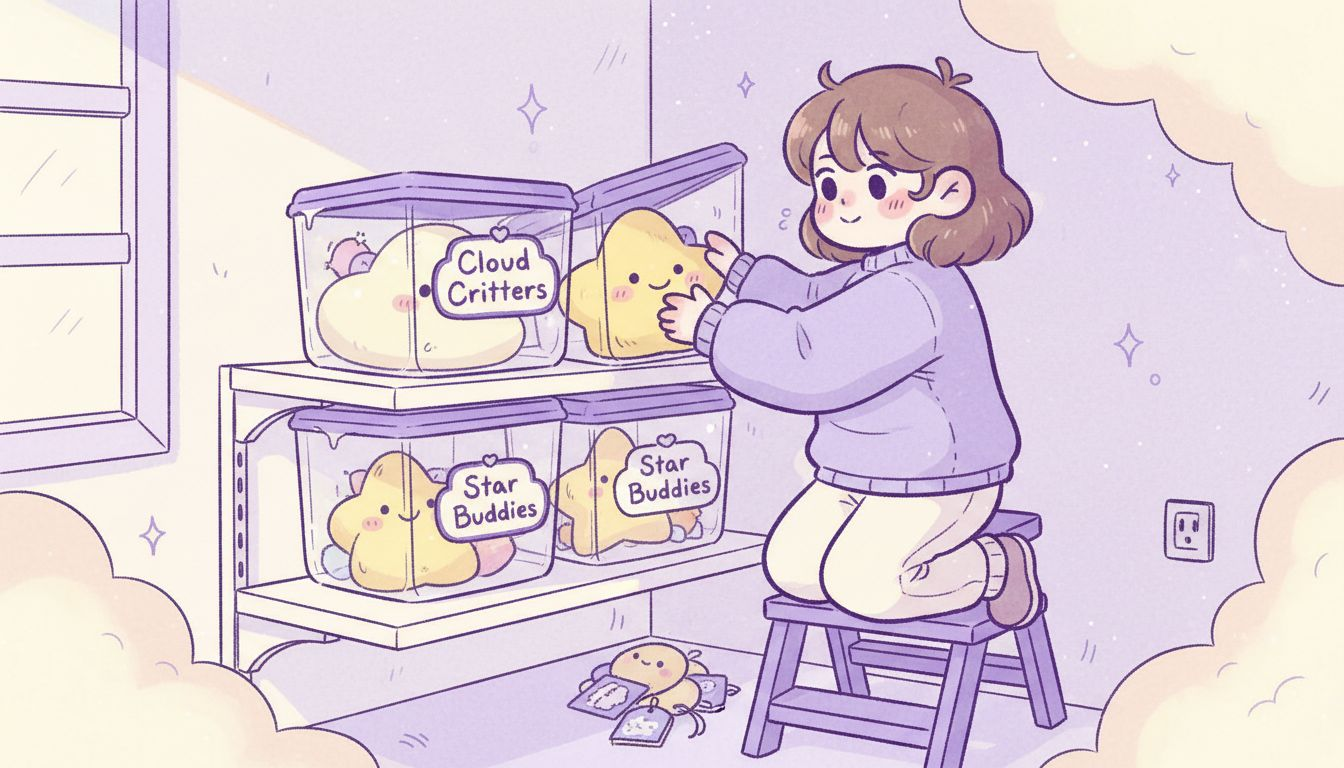
Pro tip: Take a quick smartphone photo of each sorting category to help you maintain your new organisational system over time.
Here is a summary of popular plush sorting and display approaches and their ideal use cases:
| Sorting Method | Ideal For | Key Benefit |
|---|---|---|
| By Theme | Fans of specific series | Visually cohesive displays |
| By Size | Collections with varied dimensions | Maximises storage efficiency |
| By Emotional Value | Sentimental collections | Highlights most meaningful pieces |
| By Brand/Edition | Popmart or Smiski collectors | Showcases rare or limited pieces |
Step 3: Select storage solutions for calm and access
Choosing the right storage solutions transforms your plush collection from chaotic clutter to a serene display that sparks joy. Toy storage standards emphasise the importance of selecting safe, accessible, and thoughtfully designed storage options that protect your precious collectibles.
Consider multiple storage approaches tailored to your space and collection. Clear plastic containers with secure lids work brilliantly for protecting delicate Popmart or Smiski figures from dust. Open shelving creates an inviting display for larger plushies, while hanging nets or wall mounted shelves maximise vertical space. Height matters select storage solutions that allow easy reach without creating strain or stress. Transparent containers let you appreciate your collection even when they are stored away, maintaining that visual connection to your beloved plush friends.
Material selection is crucial. Opt for non toxic, durable storage that can be easily cleaned. Wood shelves with smooth edges, clear acrylic display cases, or soft fabric organisers with reinforced structures provide both protection and aesthetic appeal. Think about your emotional connection to each plushie and choose storage that respects their unique character and your personal collecting journey.
Pro tip: Invest in adjustable storage solutions that can grow and change with your collection over time.
Below is a comparison of common storage solutions and their advantages for plush collections:
| Storage Solution | Best for Collection Type | Main Advantages |
|---|---|---|
| Clear Plastic Boxes | Small or delicate plushies | Protection from dust, easy viewing |
| Open Shelving | Large plush or displays | Quick access, decorative appeal |
| Hanging Nets | Soft, lightweight plushies | Saves floor space, playful look |
| Wall Mounted Shelves | Feature plush, limited space | Utilises vertical area, secure |
Step 4: Display and label plush for easy retrieval
Transforming your plush collection into a beautifully organised display requires thoughtful labelling and strategic placement. Safety regulations for toy labelling provide essential guidelines for creating an efficient and accessible collection that brings both joy and calm.
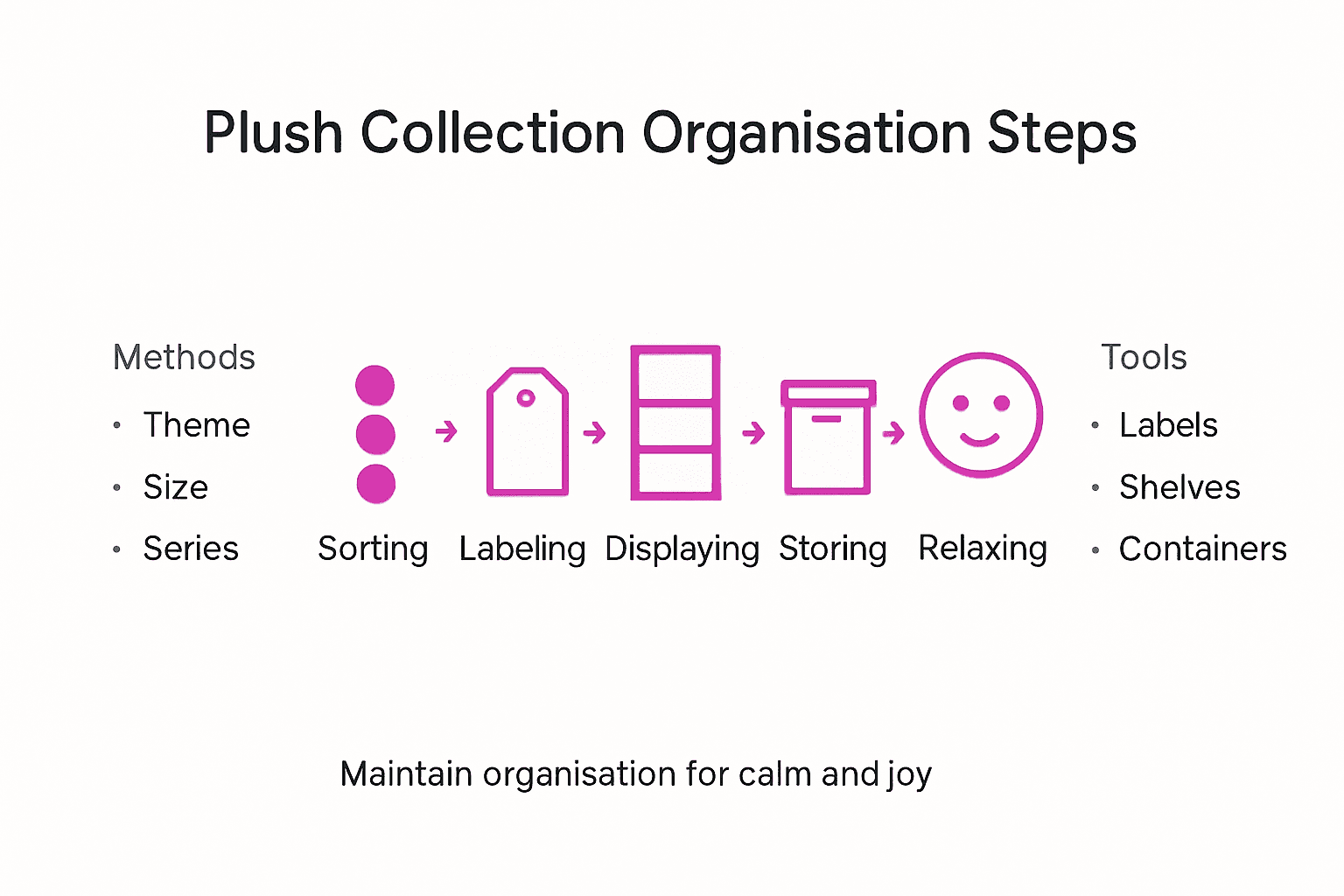
Start by creating a consistent labelling system that works for your unique collection. Consider tags or small labels that capture key details like series name, year of acquisition, or emotional significance. For Popmart collectors or Smiski enthusiasts, include details like limited edition numbers or artist information. Digital labels using small QR codes or NFC tags can be a modern solution for tracking more complex collection details. Transparent display cases or shelves with built in label holders can help maintain a clean aesthetic while keeping important information visible.
Effective labelling practices are about more than just identification they reduce stress by making your collection instantly navigable. Arrange your plushies in ways that tell a story perhaps grouping them by theme, emotional connection, or personal journey. Colour coded labels or small themed dividers can add an extra layer of visual organisation that makes retrieval a delightful experience.
Pro tip: Create a digital spreadsheet backup of your physical labelling system to ensure you never lose track of your precious collection.
Step 5: Verify organisation supports stress relief
The ultimate goal of your plush collection organisation is creating a space that genuinely reduces anxiety and promotes emotional wellbeing. Stress management strategies emphasise the importance of designing environments that feel calm and supportive.
Conduct a personal stress test with your newly organised collection. Close your eyes and imagine searching for a specific plushie. Does your current system feel intuitive? Are your Popmart or Smiski figures easily accessible? If retrieving a plush causes even a hint of frustration, it is time to refine your approach. Organisational resources suggest that reducing cognitive load through streamlined storage directly impacts emotional regulation.
Consider creating a quick reference guide or digital inventory that helps you instantly locate any plush friend. This might include colour coded tags, a digital spreadsheet, or a simple visual map of your display area. The key is designing a system that feels effortless and brings a sense of peace every time you interact with your collection.
Pro tip: Periodically review and adjust your organisation system to ensure it continues to support your emotional needs and brings you joy.
Organise Your Plush Collection for Calm and Joy with MOMORO & FRIENDS
Struggling to create calm and order in your plush collection is a common challenge many collectors face. This article highlights key goals like reducing clutter, sorting by theme or emotional value, and choosing storage that supports stress relief. MOMORO & FRIENDS offers a unique solution with Japanese-inspired plush toys designed specifically for ADHD and anxiety, combining comforting tactile experiences with innovative NFC-enabled digital gifts that lift moods and ease stress.
Discover how next-level plush organisation meets emotional wellbeing with our limited edition interactive collectibles. Whether you want a curated shelf display or a joyful collection that actively supports your calm, explore Shop Japanese-Inspired Plush Toys for ADHD & Anxiety – MOMORO & Friends to find companions that integrate seamlessly into your organisational journey.
Elevate your plush collection beyond simple storage by choosing plush friends that encourage relaxation and creativity. Visit https://momoro.store now to browse exclusive pieces that bring peace and playful interaction to your space. Start your journey towards an organised and emotionally supportive plush collection today.
Frequently Asked Questions
How can I assess my plush collection effectively?
To assess your plush collection effectively, start by gathering all your plushies in one space and categorising them based on size, series, condition, or emotional significance. Document each piece to gain an overview of your collection, which will inform your organisational goals.
What sorting methods can I use for my plush toys?
You can sort your plush toys by theme, size, emotional value, or brand. For instance, grouping by theme creates visually cohesive displays, while sorting by size maximises storage efficiency, helping you organise effectively.
How should I select storage solutions for my plush toys?
Choose storage solutions that suit the size and fragility of your plush toys, such as clear plastic containers for delicate pieces or open shelving for larger items. Ensure the storage is accessible and safe, and invest in adjustable options to accommodate any future growth in your collection.
What labelling system works best for my plush collection?
A consistent labelling system is essential for easy retrieval of your plush collection. Use tags or digital labels to capture key details, such as series name and year of acquisition, and arrange your plushies in a way that tells a story for an intuitive experience.
How can I ensure my organisation supports stress relief?
To ensure your organisation supports stress relief, conduct a personal stress test by envisioning how you locate a specific plushie. If the retrieval process causes frustration, refine your organisational system, and consider creating a quick reference guide for instant access to your plush friends.
How often should I review my plush collection organisation?
Periodically review your plush collection organisation to ensure it continues to meet your emotional needs and brings you joy. Aim to do this every few months or whenever you feel your system needs adjustment, maintaining an enjoyable and calming environment.